ALL TEST
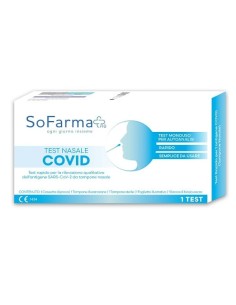
Combined rapid antigen test
for SARS-CoV-2 and influenza A/B (nasal swab)
Description
Rapid test for the qualitative detection of SARS-CoV-2 nucleocapsid protein antigens and influenza A and influenza B nucleoproteins in nasal swab samples.
The test is intended for use in symptomatic/asymptomatic individuals with suspected COVID-19 and/or influenza A/B infection.
The results indicate the detection of SARS-CoV-2 nucleocapsid protein antigens and influenza A and B nucleoproteins. An antigen is generally detectable in upper respiratory samples during the acute phase of infection.
Positive results indicate the presence of viral antigens, but clinical correlation with the patient's history and other diagnostic information is necessary to determine infection status. Positive results are indicative of the presence of SARS-CoV-2 and/or influenza A/B. Individuals who test positive should self-isolate and contact their healthcare provider for further care. A positive result does not rule out bacterial infection or co-infection with other viruses. A negative result does not rule out SARS-CoV-2 and/or influenza A/B infection.
Individuals who test negative and continue to experience COVID-19 or flu symptoms should contact their healthcare provider for further care.
For in vitro self-testing use.
Directions for use
Sample collection
Wash your hands with soap and water for at least 20 seconds before and after the test. If soap and water are not available, use a hand sanitiser with at least 60% alcohol.
Remove the sterile swab from its pouch. Do not touch the soft tip of the swab. Insert the swab into the nostril until you feel slight resistance (about 2 cm deep into the nasal cavity). Slowly rotate the swab, rubbing it along the inside of the nostril 5-10 times. This may feel uncomfortable. If you feel strong resistance or pain, do not insert the swab any deeper.
When the nasal mucosa is damaged or bleeding, nasal swab collection is not recommended.
If collecting samples from other people, wear a face mask.
With children, it may not be necessary to insert the swab as deep into the nostril. For very young children, another person may be needed to hold the child's head during collection.
Gently remove the swab. Using the same swab, repeat the procedure in the other nostril.
Withdraw the swab.
Sample preparation
Remove the lid of the tube containing the extraction buffer solution and place the tube in the tube holder in the box.
Place the swab in the extraction tube, making sure it touches the bottom, and stir the swab to mix well. Press the swab tip against the tube and rotate the swab for 10-15 seconds. Remove the swab while pressing the swab tip against the inner wall of the extraction tube.
Place the swab in a plastic bag. Close the extraction tube.
Performing the test
Remove the test cassette from the sealed foil pouch and use it within one hour. The most reliable results are obtained if the test is performed immediately after opening the pouch.
Place the test cassette on a flat, level surface. Turn the sample extraction tube upside down and add 3 drops of extracted sample to each well (S) of the test cassette, then start the timer. Do not move the cassette during the test.
Read the result after 10 minutes. Do not interpret the result after 20 minutes.
Interpreting the results
Report the test results to your healthcare provider and carefully follow local COVID-19 guidelines/requirements.
SARS-CoV-2 POSITIVE: one coloured line should be in the control area (C) and the other in the test area (T). The colour intensity in the test area (T) will vary according to the amount of SARS-CoV-2 antigen present in the sample. Therefore, any shade of colour in the test area (T) should be considered a positive result.
A positive result very likely indicates COVID-19 infection, but it must be confirmed by further testing. Self-isolate immediately in accordance with local guidelines and contact your GP or local health service straight away, following the instructions provided by the local authorities. The test result will be validated with a confirmatory PCR test and the next steps will be explained.
Influenza A POSITIVE: two coloured lines appear in the FLU A+B window. One coloured line should be in the control area (C) and the other in the influenza A area (A). The colour intensity in the test area (A) will vary according to the amount of influenza A antigen present in the sample. Therefore, any shade of colour in the test area (A) should be considered a positive result.
A positive result very likely indicates influenza A infection, but it must be confirmed by further testing. Self-isolate immediately in accordance with local guidelines and contact your GP or local health service straight away, following the instructions provided by the local authorities. The test result will be validated with a confirmatory PCR test and the next steps will be explained.
Influenza B POSITIVE: two coloured lines appear in the FLU A+B window. One coloured line should be in the control area (C) and the other in the influenza B area (B). The colour intensity in the test area (B) will vary according to the amount of influenza B antigen present in the sample. Therefore, any shade of colour in the test area (B) should be considered a positive result.
A positive result very likely indicates influenza B infection, but it must be confirmed by further testing. Self-isolate immediately in accordance with local guidelines and contact your GP or local health service straight away, following the instructions provided by the local authorities. The test result will be validated with a confirmatory PCR test and the next steps will be explained.
Influenza A and influenza B POSITIVE: three coloured lines appear in the FLU A+B window. One coloured line should be in the control area (C) and the other two in the influenza A (A) and influenza B (B) areas. The colour intensity in the test area (A/B) will vary according to the amount of influenza A/B antigen present in the sample. Therefore, any shade of colour in the test area (A/B) should be considered a positive result.
A positive result very likely indicates influenza A and influenza B infection, but it must be confirmed by further testing. Self-isolate immediately in accordance with local guidelines and contact your GP or local health service straight away, following the instructions provided by the local authorities. The test result will be validated with a confirmatory PCR test and the next steps will be explained.
NEGATIVE: one coloured line appears in the control area (C). No clear coloured line appears in the test area (T/B/A).
COVID-19 and/or influenza A/influenza B infection is unlikely. However, this test may give an incorrect negative result (false negative) in some individuals with COVID-19 and/or influenza A/influenza B. This means the individual could have COVID-19 and/or influenza A/influenza B infection even if the test result is negative. You can also repeat the test with a new kit.
If infection is suspected, repeat the test after 1-2 days, as the coronavirus/influenza virus cannot be accurately detected at all stages of infection.
Even if the test result is negative, rules on distancing and hygiene, movement and travel, attendance at events and so on must be observed, according to local COVID-19/influenza guidelines/requirements.
INVALID: the control line does not appear. The most likely causes of control line failure are insufficient sample volume or incorrect procedural techniques.
Read the instructions again and repeat the test using a new kit, or contact a COVID-19/influenza testing centre.
Warnings
For in vitro self-testing only. Do not use after the expiry date.
Before performing the test, read all the information in the package leaflet.
Do not eat, drink or smoke in the area where samples or kits are handled.
Do not drink the extraction solution contained in the kit. Handle the extraction solution with care and avoid contact with skin or eyes; in case of contact, rinse immediately with plenty of running water.
If the foil pack is damaged or has been opened, do not use the product.
This test kit should be used only as a preliminary test, and repeatedly abnormal results should be reviewed with a doctor or healthcare professional.
Strictly observe the indicated times.
Use the test only once. Do not dismantle or touch the window of the test cassette.
The kit must not be frozen or used after the expiry date printed on the pack.
In children, the test should be performed with the help of an adult.
Wash your hands thoroughly before and after handling.
Make sure an appropriate amount of sample is used for the test. Too much or too little sample may cause deviation of results.
Performance has been evaluated only with nasal swab samples, using the procedures described in the package leaflet.
The test only indicates the presence of SARS-CoV-2 and/or influenza A/influenza B antigens in the sample.
If the test result is negative or non-reactive and clinical symptoms persist, the virus may not be detected in the very early stages of infection. It is advisable to repeat the test with a new device or with a molecular diagnostic tool to rule out infection in these individuals. Negative results do not rule out SARS-CoV-2 infection, particularly in those who have been in contact with the virus. To rule out infection in these individuals, a confirmatory molecular test should be considered.
A negative result for influenza A or influenza B obtained with this kit should be confirmed by culture/RT-PCR.
Positive COVID-19 results may be due to infection with non-SARS-CoV-2 coronavirus strains or other interfering factors. A positive result for influenza A and/or B does not rule out co-infection with another pathogen, so the possibility of an underlying bacterial infection should be considered.
Failure to follow the test procedures may alter test performance.
If a sample is collected or handled improperly, the test may give false negative results.
If virus levels in the sample are below the detection limit of the test, the test may give false negative results.
Storage
Store in the sealed pack at room temperature or in the refrigerator (2–30 °C). Do not freeze.
The test is stable until the expiry date printed on the sealed pouch. The test must remain in the sealed pouch until use.
Shelf life in unopened packaging: 24 months.
Size
The kit contains:
- test cassette;
- sterile swab;
- package leaflet;
- extraction solution.
Code ISIN-525H