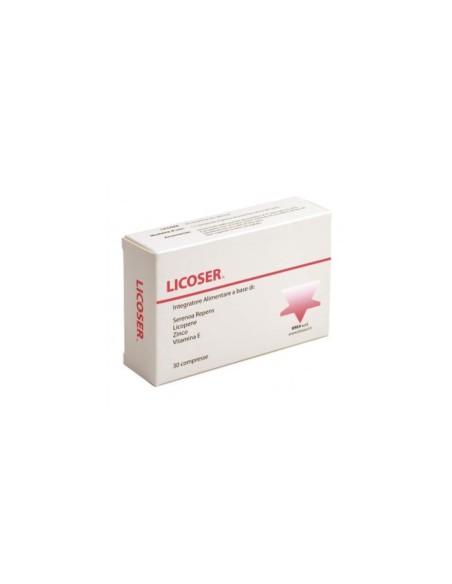
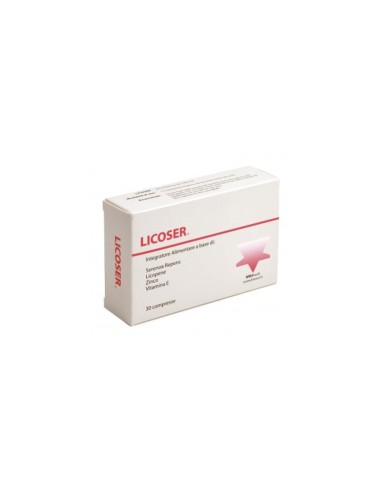
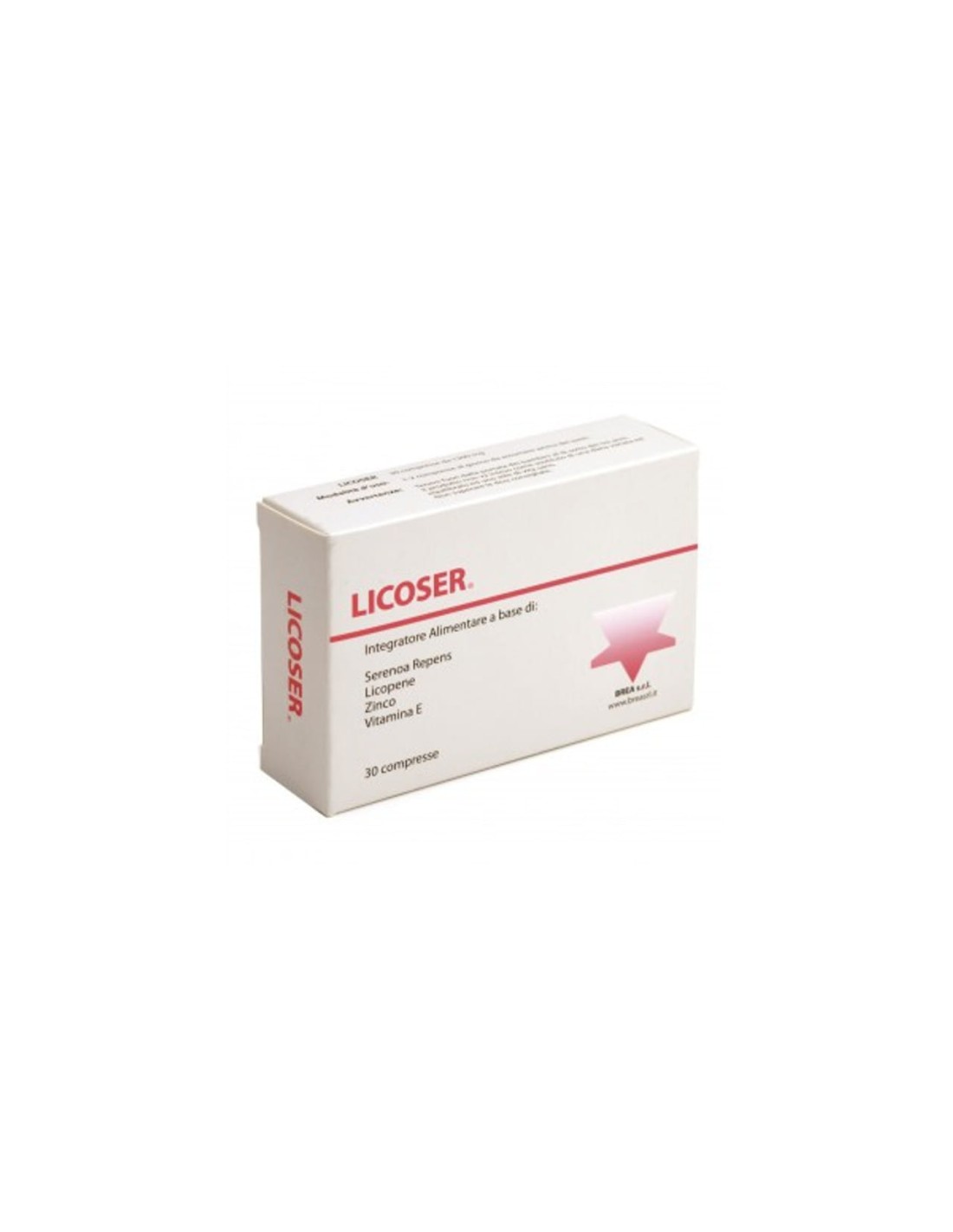
LICOSER
Food supplement based on Serenoa repens, lycopene, zinc and vitamin E, useful for making up for deficiencies in case of increased requirements or reduced dietary intake. It can be used as an aid in maintaining the physiological function of the prostate gland.
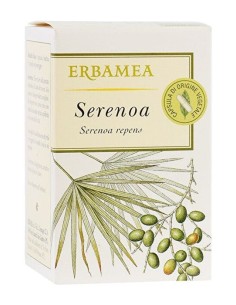
Serenoa Repens (synonym of Sabal Serrulata) A plant found in the United States, Southern Europe and North Africa. Its most important chemical constituents are various sterols, free fatty acids, carotenoids, essential oils and polysaccharides.
Useful for the proper functioning of the urinary tract and prostate.
Lycopene A natural pigment belonging to the carotenoid class, it has antioxidant properties similar to those of beta-carotene, but is much more potent and therefore more effective in countering damage from oxygen free radicals. In nature, lycopene is found in tomatoes and other plant sources; with its high antioxidant activity, it is considered the most potent free-radical "scavenger" among the carotenoids.
Urtica Dioica A perennial herbaceous plant native to western Asia, found in all temperate regions, including Italy. In modern herbal medicine the root plays a leading role, as it is rich in phytosterols (α-sitosterol, daucosterol and related glucosides), with a mechanism of action similar to that of Serenoa, but it also contains lectins (scopoletin) that inhibit EGF (Epidermal Growth Factor), a cell growth factor, which may help reduce symptoms and partly also the volume of the gland. Stinging nettle root extract may therefore be particularly beneficial in helping limit prostate tissue growth induced by androgens, in particular dihydrotestosterone.
Green Tea Obtained from the leaf buds and young leaves of the plant known by the scientific name "Camellia sinensis". The distinctive feature of this plant is its high antioxidant potential.
Contains neither gluten nor sugars.
Ingredients | | per 1 tablet
(1200 mg) |
| Serenoa repens (Extract 30% total fatty acids) | 320 mg |
| Lycopene | 8 mg |
| Zinc | 11.25 mg |
| Vitamin E | 15 mg |
Directions for use Take 1-2 tablets per day for a period of at least 6-12 months.
It can be taken at any time of day, with or away from meals.
Warnings Do not exceed the recommended daily dose. Keep out of the reach of children under 3 years of age. Supplements should not be used as a substitute for a varied diet. Pregnant or breastfeeding women and children should consult a doctor before use.
Size Pack of 30 tablets.
Code 1010007.
Bibliography - Carilla E,Briley M,Fauran F,Sultan C,Duvilliers C. Binding of Permixon,a new treatment for prostatic benign hyperplasia,to the cytosolic androgen receptor in the rat prostate.J Steroid Biochem 1984;20:521-3.
- Champault G,Patel JC,Bonnard QAM. A double-blind trial of an extract of the plant Serenoa repens in benign prostatic hyperplasia.Br J Clin Pharmacol 1984;18:461-2.
- De Bruyne F. et al. Evaluation of the clinical benefit Serenoa Repens and Tamsulosin in severe BPH patients-Personal study subset analysis.Eur.Urol. 2004 Jun;45(6):773-9;Discussion 779-80,2004.
- Boyle P,Robertson C,lowe F,Roehrborn C. Meta-analysis of clinical trials of Permixon in the treatmentof symptomatic benign prostatic hyperplasia.Urology 2000;55:533-9.
- Bent S. et al. Saw Palmetto for benign prostatic hyperplasya. N.Engl.J. Med. 354(6):557- 66,2006.
- Wilt T,Ishani A,Stark G,Mac donald R,Mulrow C,Lau J.Serenoa repens for benign prostatic hyperplasia.Cochrane Database Syst Rev 2000;2:CD001423.
- Fong YK, Milani S, Djavan B, Role of phytotherapy in men with lower urinary tract symptoms. Curr opin urol.2005; 15(1); 45-48.
- Wilt T, Ishani A, Mac Donald R, Serenoa repens for benign prostatic hyperplasia. Cochrane Database Syst Rev,2002; 3; CDCD001423.
- Strauch G, Perles P, Vergult G, et al. Comparison of finasteride and Serenoa repens in the inhibition of 5-alpha reductase in healthy male volunteers. Eur.Urology 1994; 26:3, 247-252.
- Debruyne F, Boyle P, Calais da Silva F, Gillenwater JG, Hamdy FC, Perrin P, Teillac P, Vela- Navarrete R, Raynaud JP, Schulman C, Evalutation of the clinical benefit of permixon and tamsulosin in severe BPH patiens- PERMAL study subset analysis. Prog Urol, 2004 Jun;14(3):326-331.
- Avins A.L. et al. A detailed safety assestment of a Saw Palmetto extract.Complement ther med. 16(3):147-154,2008.
- Levy J.,Bosin E. Et al.,Lycopene is a more potent inhibitor of human cancer cell proliferation than eitherv a-carotene or b- carotene.Nutr. Cancer,1995;24: 257-266.
- Sökeland J. Combined sabal and urtica extract compared with finasteride in men with benign prostatic hyperplasia:analysis of prostate volume and therapeutic outcome. BJU int 200; 86(4):439-442.
- Schneider T, Rubben H, Stinging nettle root extract in long term treatment of benign prostatic syndrome (BPS).Results of a randomized, duble-blind,placebo controlled multicenter study after 12 months. Urologe A, 2004; 43(3): 302-306.
- Lichius JJ, The inhibiting effects of components of stinging nettle roots on experimentally induced prostatic i hyperplasia in mice. Planta Med,1999;65, 7: 666-668.
- Bombardelli E, Morazzoni P, Urtica Dioica L. Fitoterapia 1997; 68,5, 387-402.
- Chem Pharm, Bulletin 38-1990.
- Kurahashi N, Inoue M, Iwasaki M, Sasazuki S, Tsugane AS, Japan Public Health Center- Based Prospective Study Group. Dairy product, satured fatty acid, and calcium intake and prostate cancer in a prospective cohort of Japanese men. Cancer Epidemiol Biomarkers Prev, 2008 Apr; 17 (4): 930-937.
- Betuzzi S, Brausi M, Rizzi F, Castagnetti G, Peracchia G, Corti A, Chemoprevention of human prostate cancer by oral administration of green tea catechins in volunteers with high-grade prostate intraepithelial neoplasia: a preliminary report from a one-year proof-of-principle study. cancer Res,2006 Jan 15;66(2): 1234-1240.
- Etminan M, Takkouche B, Caamano-Isorna F The role of tomato products and lycopene in the prevention of prostate cancer: a meta- analysis of observational studies. Cancer Epidemiol Biomarkers Prev, 2004 Mar; 13 (3): 340-345.
- Michael B. Sporn and Karen T. Liby Is Lycopene an effective Agent for preventing prostate cancer? Cancer Prevention Research 14-03-2013.