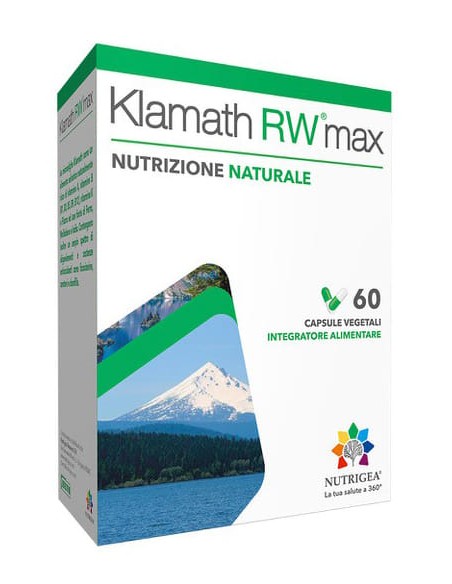
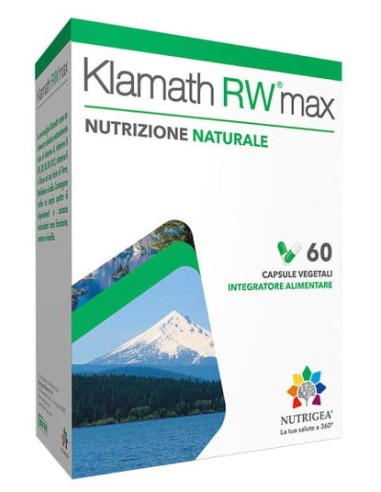
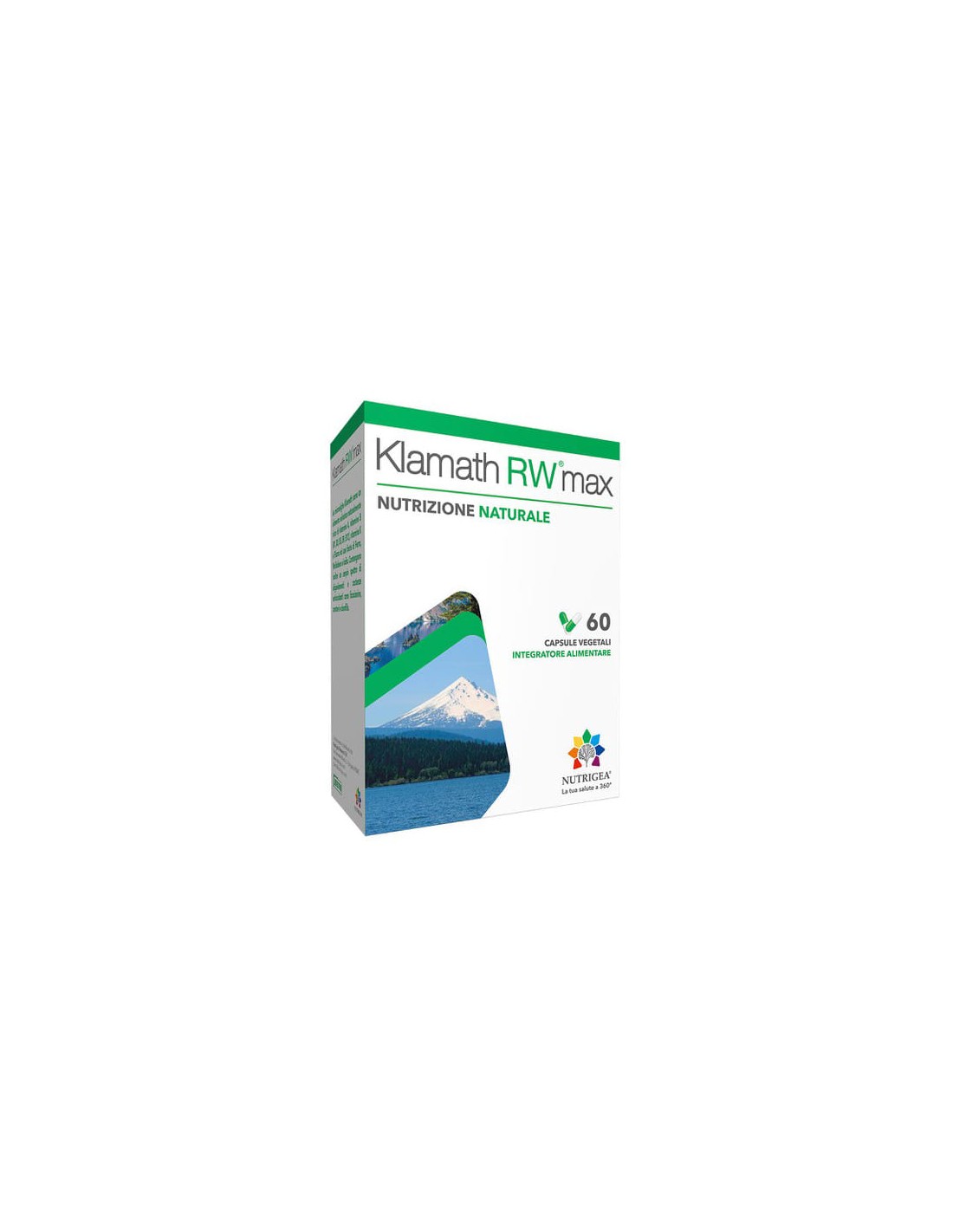
KLAMAT
RW max Nahrungsergänzungsmittel mit Klamath-Mikroalgen; sie enthalten über 100 Nährstoffe (Vitamine, Mineralstoffe, Aminosäuren, Omega-3-Fettsäuren) und nutrazeutische Moleküle (Phycocyanine, Polyphenole, Carotinoide, Chlorophyll usw.) sowie 12 ernährungsphysiologisch relevante Vitamine und Mineralstoffe, die einen nennenswerten Teil des Tagesbedarfs decken.
Eine wertvolle Hilfe bei Nährstoffmängeln sowie unregelmäßiger und unausgewogener Ernährung, bei mit moderner Ernährung und Lebensweise verbundenen Belastungen und bei übermäßigem oxidativem Stress.
Bei Vitamin-B12-Mangel, zur Unterstützung der Proteinverwertung und des Eiweißstoffwechsels, bei Ungleichgewichten im Glukosestoffwechsel und erhöhtem Homocystein sowie im Fettstoffwechsel.
Bei Stress, Müdigkeit und Reizbarkeit.
Bei geschwächten Abwehrkräften, zur Unterstützung des Immunsystems, als Energiequelle und zur Unterstützung des Muskeltonus.
Aminosäuren Klamath-Algen enthalten 60 % bis 70 % hochwertiges Eiweiß und alle 20 Aminosäuren. Das ausgewogene Verhältnis ihrer essenziellen Aminosäuren erklärt, warum die Klamath-Alge eine bessere Verwertung der mit der Nahrung aufgenommenen Proteine begünstigen und so den Aufbau und die Straffung der Muskulatur unterstützen kann.
Essenzielle Fettsäuren Klamath RW max liefert bis zu 15 mg Omega-3-Fettsäuren pro Gramm, also in 3 g eine nennenswerte Menge. Dank ihres Gehalts an mehrfach ungesättigten Fettsäuren, vor allem Omega-3, und des Zusammenspiels mit zahlreichen weiteren Faktoren wie ihren AFA-Phycocyaninen (siehe unten) kann die Klamath-Alge zu einem normalen Fettstoffwechsel beitragen.
Carotinoide Sie ist außerdem eine der reichsten Quellen für Beta-Carotin in gut verwertbarer Form. Dank des Zusammenspiels mit 14 weiteren Carotinoiden, den Fettsäuren und anderen Nährstoffen wird das Beta-Carotin der Klamath-Alge sehr gut aufgenommen, wie eine Studie zeigte, in der die Teilnehmenden nach einem Monat Einnahme der Alge einen durchschnittlichen Anstieg des Plasma-Retinols um 60 % aufwiesen. Retinol ist die aktive Form von Vitamin A, das unter anderem zur Erhaltung normaler Sehkraft und normaler Haut beiträgt. Natürliches Beta-Carotin ist bei physiologisch angemessener Aufnahme gut verträglich, anders als synthetisches Beta-Carotin: Die „CARET Studies“ haben gezeigt, dass synthetisches oder isoliertes Beta-Carotin oxidative Prozesse sogar begünstigen kann. Unter ihren 15 Carotinoiden ist die Klamath-Alge reich an verschiedenen Xanthophyllen, angefangen bei Canthaxanthin (300 mcg/g), einem der stärksten Antioxidantien, sowie bekannteren wie Lutein, Zeaxanthin, Lycopin und Astaxanthin.
Chlorophyll Die an antioxidativen Pigmenten sehr reiche Klamath Nutrigea besteht zu über 1 % ihres Trockengewichts aus Chlorophyll, das ausgeprägte antioxidative Eigenschaften besitzt.
Neben ihren ernährungsphysiologischen Eigenschaften enthalten diese Mikroalgen reichlich spezifische Moleküle: Phycocyanine/AFA-Phycocyanine, Phenylethylamin, Mycosporine, Chlorophyll sowie spezifische Peptide und Polysaccharide.
Phycocyanine / AFA-Phycocyanine AFA-Phycocyanine sind eine besondere Art von Phycocyaninen, die nur in Klamath-Algen vorkommen. Sie bestehen aus C-Phycocyanin (wie bei allen Blaualgen), enthalten jedoch nicht das für Spirulina typische Allophycocyanin, und haben in Studien antioxidative Eigenschaften gezeigt.
Phenylethylamin (PEA) Ein Molekül, das unser Gehirn in Zuständen von Euphorie und Freude auf natürliche Weise bildet (es wird sogar als „Liebesmolekül“ bezeichnet) und das zu einer ausgeglichenen Stimmung, geistiger Wachheit und Gedächtnisleistung beitragen kann.
MAO-B-hemmende Moleküle Die Wirkung von PEA wird durch Monoaminoxidase-B-Hemmer (MAO-B) unterstützt, die in Klamath RW max enthalten sind – AFA-Phycocyanine, Algen-Mycosporine, AFA-Phytochrom – und PEA aktiv und wirksam halten. MAO-B sind die Enzyme, die Monoamine wie PEA und Dopamin abbauen und so deren Wirkung begrenzen. Zudem nimmt ab etwa 40 Jahren die Aktivität der MAO-B zu, während die Verfügbarkeit einiger Monoamine wie Dopamin abnimmt. In diesem Zusammenhang kann eine Ergänzung mit Klamath RW max sinnvoll sein.
Phenolsäuren Wie die Kaffeesäure, die ebenfalls ausgeprägte antioxidative Eigenschaften besitzt. Polyphenole sind für ihre Wirkung als Radikalfänger („Scavenger“) bekannt und werden nach ihrer Molekülstruktur in verschiedene Gruppen eingeteilt.
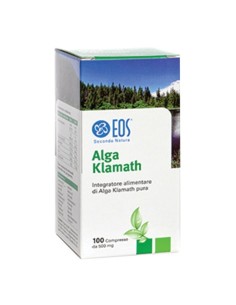
Erhältlich in 2 Varianten: Kapseln und Tropfen.
Zutaten Kapseln:
Klamath-Mikroalgen RW max (Aphanizomenon Flos Aquae); Creamy (Kartoffelpulver).
Tropfen:
Apfelsaftkonzentrat; pflanzliches Glycerin; gereinigtes Wasser; Akazienhonig; Klamath-Mikroalgen RW max (Aphanizomenon Flos Aquae); natürliches Erdbeeraroma; Grapefruit (Citrus grandis L. - Osbeck und/oder Citrus x paradisi MacFayden) Samen- und/oder Frucht-Trockenextrakt, Konservierungsmittel: Kaliumsorbat; Säuerungsmittel: Citronensäure.
Anwendung Kapseln: zweimal täglich 2–3 Kapseln einnehmen.
Tropfen: 2- bis 3-mal täglich 20 Tropfen (1 ml) in etwas Wasser oder direkt unter die Zunge geben.
Hinweise Die empfohlene Tagesdosis nicht überschreiten.
Außerhalb der Reichweite von Kindern unter drei Jahren aufbewahren.
Nahrungsergänzungsmittel sind kein Ersatz für eine abwechslungsreiche Ernährung.
Schwangeren, Stillenden und Kindern wird empfohlen, vor der Einnahme ärztlichen Rat einzuholen.
Aufbewahrung Kühl und trocken lagern.
Nährwertangaben | Vitamine pro 3 g Klamath RW max |
| | Menge | LARN/*RDA |
| Vitamin A (aus Carotinoiden) | 0,9 mg | 100 %* |
| Vitamin B1 | 750 µg | 50 %* |
| Riboflavin (B2) | 115 µg | 7 %* |
| Niacin (B3) | 12 mg | 66 %* |
| Pantothensäure (B5) | 4,65 mg | 75 %* |
| Pyridoxin (B6) | 85 µg | 4,5 %* |
| Folsäure (B9) | 120 µg | 60 %* |
| Cobalamin (B12) | 3 - 4 µg | 100 %* |
| Vitamin C | 6 mg | 10 % |
| Vitamin E | 840 µg | 8,4 % |
| Vitamin K | 100 µg | über 100 %* |
| Mineralstoffe | Gehalt pro 3 g
RW max | % LARN* |
| Calcium | 30 - 45 mg | 3 - 5 % |
| Phosphor | 48 mg | 6 % |
| Eisen | 5 - 12 mg | 35 - 85 % |
| Magnesium | 9 mg | 3 % |
| Zink | 120 µg | 0,8 % |
| Jod | 54 µg | 36 % |
| Fluor | 24 µg | 2 % |
| Selen | 2, 5 mg | 100 % |
| Mangan | 3 µg | 5 % |
| Chrom | 90 µg | 9 % |
| Molybdän | 14 µg | 30 % |
| Vanadium | 9 µg | 90 % |
| Bor | 33 µg | 3,3 % |
Packungsgröße Packung mit 60 Kapseln.
Flasche mit 50 ml.
Art.-Nr. NNK6/ NKL.
Literatur - Baroni, L., et al., Effect of a Klamath algae product (“AFA-B12”) on blood levels of vitamin B12 and homocysteine in vegan subjects: a pilot study. Int J Vitam Nutr Res, 2009. 79(2): p. 117- 23.
- Kushak R. I., D.C., Winter H. S., The Effect of Blue-Green Algae Aphanizomenon Flos Aquae on Nutrient Assimilation in Rats. The Journal of the American Nutraceutical Association, 2001. 3(4): p. 34.
- Kushak R., V.E., Drapeau C., Winter H., Effect of algae Aphanizomenon flos-aquae on digestive enzyme activity and polyunsaturated fatty acids level in blood plasma. Gastroenterology, 1999. 116:A559.
- Benedetti, S.S.S., Stato antiossidante e perossidazione lipidica in risposta alla supplementazione con alga Klamath. Medicina Naturale, 2003. 6: p. pp. 67-71.
- Mayne, S.T., Beta-carotene, carotenoids, and disease prevention in humans. FASEB J, 1996. 10(7): p. 690-701.
- Pryor, W.A., W. Stahl, and C.L. Rock, Beta carotene: from biochemistry to clinical trials. Nutr Rev, 2000. 58(2 Pt 1): p. 39-53.
- Kamat JP, B.K., Devasagayam TP., Chlorophyllin as an effective antioxidant against membrane damage in vitro and ex vivo. Biochim Biophys Acta. 2000 Sep 27;1487(2-3):113-27., 2000. Sep 27;1487(2-3):113-27.
- Boloor KK, K.J., Devasagayam TP., Chlorophyllin as a protector of mitochondrial membranes against gamma-radiation and photosensitization. Toxicology, 2000. Nov 30;155(1-3):63-71.
- Bhat, V.B. and K.M. Madyastha, C-phycocyanin: a potent peroxyl radical scavenger in vivo and in vitro. Biochem Biophys Res Commun, 2000. 275(1): p. 20-5.
- Vadiraja, B.B., N.W. Gaikwad, and K.M. Madyastha, Hepatoprotective effect of C-phycocyanin: protection for carbon tetrachloride and R-(+)-pulegone-mediated hepatotoxicity in rats. Biochem Biophys Res Commun, 1998. 249(2): p. 428-31.
- Romay, C., N. Ledon, and R. Gonzalez, Phycocyanin extract reduces leukotriene B4 levels in arachidonic acid-induced mouse-ear inflammation test. J Pharm Pharmacol, 1999. 51(5): p. 641-2.
- Gonzalez, R., et al., Anti-Inflammatory Activity of Phycocyanin Extract in Acetic Acid-Induced Colitis in Rats. Pharmacol Res, 1999. 39(1): p. 1055-1059.
- Benedetti, S., et al., Oxygen radical absorbance capacity of phycocyanin and phycocyanobilin from the food supplement Aphanizomenon flos-aquae. J Med Food, 2010. 13(1): p. 223-7.
- Rimbau, V., et al., Protective effects of C-phycocyanin against kainic acid-induced neuronal damage in rat hippocampus. Neurosci Lett, 1999. 276(2): p. 75-8.
- Sun, Y., et al., The protective effect of C-phycocyanin on paraquat-induced acute lung injury in rats. Environ Toxicol Pharmacol, 2011. 32(2): p. 168-74.
- Federici, M., et al., Trace amines depress GABA B response in dopaminergic neurons by inhibiting G-betagamma-gated inwardly rectifying potassium channels. Mol Pharmacol, 2005. 67(4): p. 1283-90.
- Xie, Z. and G.M. Miller, Beta-phenylethylamine alters monoamine transporter function via trace amine-associated receptor 1: implication for modulatory roles of trace amines in brain. J Pharmacol Exp Ther, 2008. 325(2): p. 617-28.
- Yoneda, F., et al., Structure-activity studies leading to (-)1-(benzofuran-2-yl)-2-propylaminopentane, ((-)BPAP), a highly potent, selective enhancer of the impulse propagation mediated release of catecholamines and serotonin in the brain. Bioorg Med Chem, 2001. 9(5): p. 1197-212.
- Kosa, E., et al., Effects of beta-phenylethylamine on the hypothalamo-pituitary-adrenal axis in the male rat. Pharmacol Biochem Behav, 2000. 67(3): p. 527-35.
- Kushak R, D.C., Van Cott E, Winter H, Blue-green alga Aphanizomenon flos-aquae as a source of dietary polyunsaturated fatty acids and a hypocholesterolemic agent. American Chemical Society, Chemistry and nutrition, National Meeting. Anaheim, CA, 1999. A045(Jana Vol. 3, No. 4).
- Rafail, I.K., Favorable Effects of Blue Green Algae Aphanizomenon Flos Aquae on Rat Plasma Lipid. Journal of the American Nutraceutical Association, 2000. 2(3): p. pp.59-65.
- Kushak R., D.C., Winter H.S., The Effect of Blue-Green Algae Aphanizomenon Flos-Aquae on Nutrient Assimilation in Rats. Journal of American Nutraceutical Association, 2001. 3(4): p. 35-39.
- Long, J., et al., Neuronal mitochondrial toxicity of malondialdehyde: inhibitory effects on respiratory function and enzyme activities in rat brain mitochondria. Neurochem Res, 2009. 34(4): p. 786-94.
- Reddy, C.M., et al., Selective inhibition of cyclooxygenase-2 by C-phycocyanin, a biliprotein from Spirulina platensis. Biochem Biophys Res Commun, 2000. 277(3): p. 599-603.
- Romay, C., N. Ledon, and R. Gonzalez, Further studies on antiinflammatory activity of phycocyanin in some animal models of inflammation. Inflamm Res, 1998. 47(8): p. 334-8.
- Jensen G.S. et al., Consumption of Aphanizomenon flos aquae has rapid effects on the circulation and function of immune cells in humans., in Journal of the American Nutraceutical Association, 2000 (2): 50–58.
- Pough N. et al., Isolation of three high molecular weight polysaccharide preparations with potent immunostimulatory activity from Spirulina platensis, Aphanizomenon flos-aquae and Chlorella pyrenoidosa, in Planta Medica, 2001 (67): 737– 742.
- Hart A.N. et al., Natural killer cell activation and modulation of chemokine receptor profile in vitro by an extract from the cyanophyta Aphanizomenon flos-aquae, in Journal of Med Food, 2007 Sep;10(3):435-41.
- Benedetti, Y., Neuromodulatory and neuroprotective activity of the micro-algae Aphanizomenon Flos Aquae. University of Urbino, Faculty of Science, Thesis for Doctorate in Biochemical and Pharmacological Methodologies, 2007.
- Yang, J.Q., et al., Protection of mouse brain from aluminuminduced damage by caffeic acid. CNS Neurosci Ther, 2008. 14(1): p. 10-6.
- Scoglio, S., et al., Effect of a 2-month treatment with Klamin, a Klamath algae extract, on the general well-being, antioxidant profile and oxidative status of postmenopausal women. Gynecol Endocrinol, 2009. 25(4): p. 235-40.
- Khan, M., et al., C-phycocyanin protects against ischemiareperfusion injury of heart through involvement of p38 MAPK and ERK signaling. Am J Physiol Heart Circ Physiol, 2006. 290(5): p. H2136-45.
- Riss, J., et al., Phycobiliprotein C-phycocyanin from Spirulina platensis is powerfully responsible for reducing oxidative stress and NADPH oxidase expression induced by an atherogenic diet in hamsters. J Agric Food Chem, 2007. 55(19): p. 7962-7.
- Nagaoka, S., et al., A novel protein C-phycocyanin plays a crucial role in the hypocholesterolemic action of Spirulina platensis concentrate in rats. J Nutr, 2005. 135(10): p. 2425- 30.
- Madhyastha, H.K., et al., uPA dependent and independent mechanisms of wound healing by C-phycocyanin. J Cell Mol Med, 2008. 12(6B): p. 2691-703.