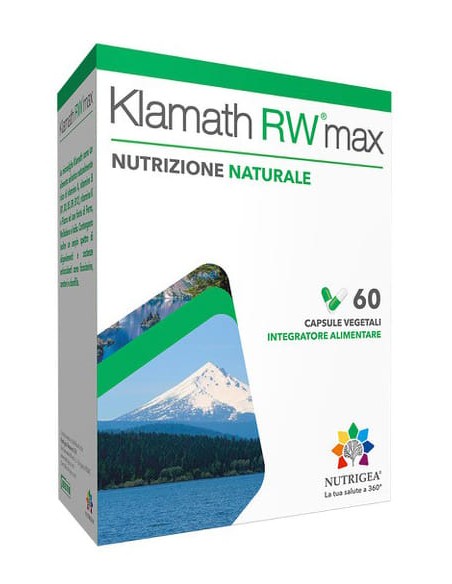
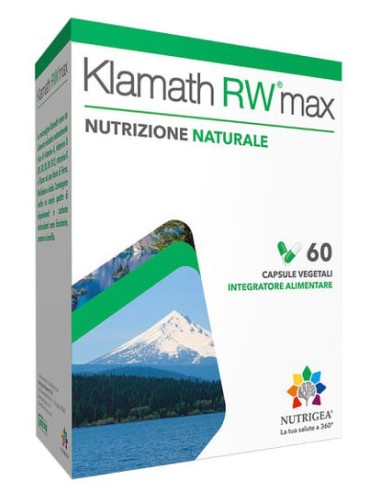
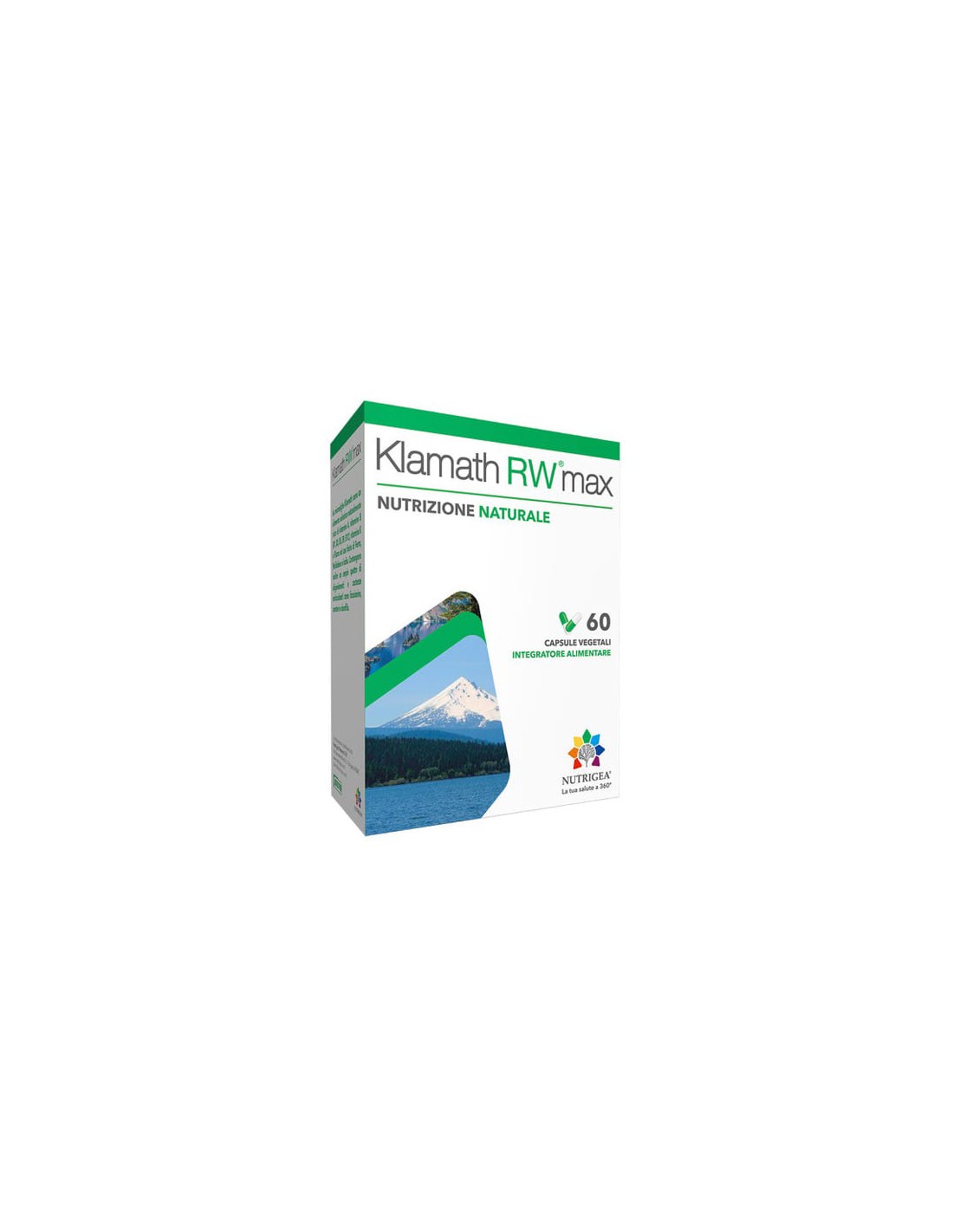
KLAMAT
RW max Food supplement based on Klamath microalgae, which contain over 100 nutrients (vitamins, minerals, amino acids, Omega-3 fatty acids) and nutraceutical molecules (phycocyanins, polyphenols, carotenes, chlorophyll, etc.), including 12 LARN-relevant vitamins and minerals, i.e. covering a significant share of the daily requirement.
Valuable help in case of nutritional deficiencies and irregular or inadequate diet, degenerative processes linked to modern diet and lifestyle, and excessive oxidation levels.
Vitamin B12 deficiency, increased protein absorption and metabolism, glucose metabolism imbalances - excess homocysteine; lipid metabolism imbalances.
Cardiovascular risk, stress, tiredness, irritability.
Weakened immunity, support for the immune system, energy support and support for muscle tone.
Amino acids Klamath algae contain 60% to 70% high-quality protein. It is the only known food to contain all 20 amino acids. The optimal proportion of its essential amino acids explains Klamath's ability to support better absorption of dietary protein, and therefore to support muscle building and toning.
Essential Fatty Acids Klamath RW max provides up to 15 mg of Omega-3 per gram, and therefore a usefully significant amount in 3 g. Thanks to its content of polyunsaturated fatty acids, especially Omega-3, and its synergy with numerous other factors such as its AFA-phycocyanins (see below), Klamath has been shown to contribute to normal fat metabolism.
Carotenes It is also one of the richest sources of beta-carotene in a highly absorbable form. Thanks to its synergy with the other 14 carotenes, fatty acids and other nutritional factors, Klamath beta-carotene has an excellent absorption rate, as shown by a study in which participants, after one month of taking the algae, achieved an average 60% increase in plasma retinol, the active form of vitamin A, which has essential protective functions for the cardiovascular system, nervous system, vision and skin. Natural beta-carotene supplementation is not only more effective but, unlike synthetic supplementation, has no counterproductive effects when absorbed at physiologically compatible levels. The "CARET Studies" showed that synthetic or isolated beta-carotene may even promote oxidative processes that could lead to various degenerative events, some serious. Among its 15 carotenes, Klamath is rich in various xanthophylls, starting with canthaxanthin (300 mcg/g), one of the most powerful antioxidants, and others better known such as lutein, zeaxanthin, lycopene and astaxanthin.
Chlorophyll Very rich in antioxidant pigments, Klamath Nutrigea provides over 1% of its dry weight as chlorophyll, which has high antioxidant properties.
These microalgae have evident nutritional-therapeutic properties, but also an abundance of specific molecules: phycocyanins/AFA-phycocyanins, phenylethylamine, mycosporines, chlorophyll, specific peptides and polysaccharides.
Phycocyanins / AFA-phycocyanins AFA-phycocyanins are a special type of phycocyanin found only in Klamath algae. AFA-phycocyanins, composed of C-phycocyanin (like all other blue-green algae) but lacking the allophycocyanin typical of Spirulina, have shown antioxidant and anti-inflammatory properties.
Phenylethylamine (PEA) A molecule naturally produced by our brain in states of euphoria and joy (so much so that it has been called the love molecule), which may help normalise mood and improve mental sharpness and memory.
Anti-MAO-B molecules The action of PEA is supported by monoamine oxidase-B (MAO-B) inhibitors present in Klamath RW max - AFA-phycocyanins, algal mycosporines, AFA-phytochrome - which make PEA active and effective. MAO-B are the enzymes that break down monoamines such as PEA and dopamine, limiting their effect. In addition, from the age of 40 MAO-B activity increases while the availability of some monoamines, such as dopamine, decreases. In this context, supplementation with Klamath RW max may be useful.
Phenolic acids Such as caffeic acid, which also have high antioxidant and anti-inflammatory properties. Polyphenols are in fact known for their "scavenger" activity and are divided into different groups according to their molecular structure.
Available in 2 versions: capsules and drops.
Ingredients In the capsules:
Klamath RW max microalgae (Aphanizomenon flos-aquae); creamy (potato powder).
In the drops:
concentrated apple juice; vegetable glycerin; purified water; acacia honey; Klamath RW max microalgae (Aphanizomenon flos-aquae); natural strawberry flavouring; grapefruit (Citrus grandis L. - Osbeck and/or Citrus x paradisi MacFayden) seed and/or fruit dry extract, preservative: potassium sorbate; acidifier: citric acid.
Directions for use Capsules: take 2 - 3 capsules twice a day.
Drops: take 20 drops (1 ml) dissolved in a little water or directly under the tongue, 2 - 3 times a day.
Warnings Do not exceed the recommended daily dose.
Keep out of the reach of children under three years of age.
Supplements should not be used as a substitute for a varied diet.
Pregnant or breastfeeding women and children should seek medical advice.
Storage Store in a cool, dry place.
Nutritional information | Vitamins per 3 g of Klamat RW max |
| | amount | LARN/*RDA |
| Vitamin A (from carotenes) | 0.9 mg | 100 %* |
| Vitamin B1 | 750 µg | 50 %* |
| Riboflavin (B2) | 115 µg | 7 %* |
| Niacin (B3) | 12 mg | 66 %* |
| Pantothenic acid (B5) | 4.65 mg | 75 %* |
| Pyridoxine (B6) | 85 µg | 4.5 %* |
| Folic acid (B9) | 120 µg | 60 %* |
| Cobalamin (B12) | 3 - 4 µg | 100 %* |
| Vitamin C | 6 mg | 10 % |
| Vitamin E | 840 µg | 8.4 % |
| Vitamin K | 100 µg | over 100 %* |
| Minerals | content per 3 g
RW max | % LARN* |
| Calcium | 30 - 45 mg | 3 - 5 % |
| Phosphorus | 48 mg | 6 % |
| Iron | 5 - 12 mg | 35 - 85 % |
| Magnesium | 9 mg | 3 % |
| Zinc | 120 µg | 0.8 % |
| Iodine | 54 µg | 36 % |
| Fluoride | 24 µg | 2 % |
| Selenium | 2, 5 mg | 100 % |
| Manganese | 3 µg | 5 % |
| Chromium | 90 µg | 9 % |
| Molybdenum | 14 µg | 30 % |
| Vanadium | 9 µg | 90 % |
| Boron | 33 µg | 3.3 % |
Pack size Pack of 60 capsules.
50 ml bottle.
Code NNK6/ NKL.
Bibliography - Baroni, L., et al., Effect of a Klamath algae product (“AFA-B12”) on blood levels of vitamin B12 and homocysteine in vegan subjects: a pilot study. Int J Vitam Nutr Res, 2009. 79(2): p. 117- 23.
- Kushak R. I., D.C., Winter H. S., The Effect of Blue-Green Algae Aphanizomenon Flos Aquae on Nutrient Assimilation in Rats. The Journal of the American Nutraceutical Association, 2001. 3(4): p. 34.
- Kushak R., V.E., Drapeau C., Winter H., Effect of algae Aphanizomenon flos-aquae on digestive enzyme activity and polyunsaturated fatty acids level in blood plasma. Gastroenterology, 1999. 116:A559.
- Benedetti, S.S.S., Stato antiossidante e perossidazione lipidica in risposta alla supplementazione con alga Klamath. Medicina Naturale, 2003. 6: p. pp. 67-71.
- Mayne, S.T., Beta-carotene, carotenoids, and disease prevention in humans. FASEB J, 1996. 10(7): p. 690-701.
- Pryor, W.A., W. Stahl, and C.L. Rock, Beta carotene: from biochemistry to clinical trials. Nutr Rev, 2000. 58(2 Pt 1): p. 39-53.
- Kamat JP, B.K., Devasagayam TP., Chlorophyllin as an effective antioxidant against membrane damage in vitro and ex vivo. Biochim Biophys Acta. 2000 Sep 27;1487(2-3):113-27., 2000. Sep 27;1487(2-3):113-27.
- Boloor KK, K.J., Devasagayam TP., Chlorophyllin as a protector of mitochondrial membranes against gamma-radiation and photosensitization. Toxicology, 2000. Nov 30;155(1-3):63-71.
- Bhat, V.B. and K.M. Madyastha, C-phycocyanin: a potent peroxyl radical scavenger in vivo and in vitro. Biochem Biophys Res Commun, 2000. 275(1): p. 20-5.
- Vadiraja, B.B., N.W. Gaikwad, and K.M. Madyastha, Hepatoprotective effect of C-phycocyanin: protection for carbon tetrachloride and R-(+)-pulegone-mediated hepatotoxicity in rats. Biochem Biophys Res Commun, 1998. 249(2): p. 428-31.
- Romay, C., N. Ledon, and R. Gonzalez, Phycocyanin extract reduces leukotriene B4 levels in arachidonic acid-induced mouse-ear inflammation test. J Pharm Pharmacol, 1999. 51(5): p. 641-2.
- Gonzalez, R., et al., Anti-Inflammatory Activity of Phycocyanin Extract in Acetic Acid-Induced Colitis in Rats. Pharmacol Res, 1999. 39(1): p. 1055-1059.
- Benedetti, S., et al., Oxygen radical absorbance capacity of phycocyanin and phycocyanobilin from the food supplement Aphanizomenon flos-aquae. J Med Food, 2010. 13(1): p. 223-7.
- Rimbau, V., et al., Protective effects of C-phycocyanin against kainic acid-induced neuronal damage in rat hippocampus. Neurosci Lett, 1999. 276(2): p. 75-8.
- Sun, Y., et al., The protective effect of C-phycocyanin on paraquat-induced acute lung injury in rats. Environ Toxicol Pharmacol, 2011. 32(2): p. 168-74.
- Federici, M., et al., Trace amines depress GABA B response in dopaminergic neurons by inhibiting G-betagamma-gated inwardly rectifying potassium channels. Mol Pharmacol, 2005. 67(4): p. 1283-90.
- Xie, Z. and G.M. Miller, Beta-phenylethylamine alters monoamine transporter function via trace amine-associated receptor 1: implication for modulatory roles of trace amines in brain. J Pharmacol Exp Ther, 2008. 325(2): p. 617-28.
- Yoneda, F., et al., Structure-activity studies leading to (-)1-(benzofuran-2-yl)-2-propylaminopentane, ((-)BPAP), a highly potent, selective enhancer of the impulse propagation mediated release of catecholamines and serotonin in the brain. Bioorg Med Chem, 2001. 9(5): p. 1197-212.
- Kosa, E., et al., Effects of beta-phenylethylamine on the hypothalamo-pituitary-adrenal axis in the male rat. Pharmacol Biochem Behav, 2000. 67(3): p. 527-35.
- Kushak R, D.C., Van Cott E, Winter H, Blue-green alga Aphanizomenon flos-aquae as a source of dietary polyunsaturated fatty acids and a hypocholesterolemic agent. American Chemical Society, Chemistry and nutrition, National Meeting. Anaheim, CA, 1999. A045(Jana Vol. 3, No. 4).
- Rafail, I.K., Favorable Effects of Blue Green Algae Aphanizomenon Flos Aquae on Rat Plasma Lipid. Journal of the American Nutraceutical Association, 2000. 2(3): p. pp.59-65.
- Kushak R., D.C., Winter H.S., The Effect of Blue-Green Algae Aphanizomenon Flos-Aquae on Nutrient Assimilation in Rats. Journal of American Nutraceutical Association, 2001. 3(4): p. 35-39.
- Long, J., et al., Neuronal mitochondrial toxicity of malondialdehyde: inhibitory effects on respiratory function and enzyme activities in rat brain mitochondria. Neurochem Res, 2009. 34(4): p. 786-94.
- Reddy, C.M., et al., Selective inhibition of cyclooxygenase-2 by C-phycocyanin, a biliprotein from Spirulina platensis. Biochem Biophys Res Commun, 2000. 277(3): p. 599-603.
- Romay, C., N. Ledon, and R. Gonzalez, Further studies on antiinflammatory activity of phycocyanin in some animal models of inflammation. Inflamm Res, 1998. 47(8): p. 334-8.
- Jensen G.S. et al., Consumption of Aphanizomenon flos aquae has rapid effects on the circulation and function of immune cells in humans., in Journal of the American Nutraceutical Association, 2000 (2): 50–58.
- Pough N. et al., Isolation of three high molecular weight polysaccharide preparations with potent immunostimulatory activity from Spirulina platensis, Aphanizomenon flos-aquae and Chlorella pyrenoidosa, in Planta Medica, 2001 (67): 737– 742.
- Hart A.N. et al., Natural killer cell activation and modulation of chemokine receptor profile in vitro by an extract from the cyanophyta Aphanizomenon flos-aquae, in Journal of Med Food, 2007 Sep;10(3):435-41.
- Benedetti, Y., Neuromodulatory and neuroprotective activity of the micro-algae Aphanizomenon Flos Aquae. University of Urbino, Faculty of Science, Thesis for Doctorate in Biochemical and Pharmacological Methodologies, 2007.
- Yang, J.Q., et al., Protection of mouse brain from aluminuminduced damage by caffeic acid. CNS Neurosci Ther, 2008. 14(1): p. 10-6.
- Scoglio, S., et al., Effect of a 2-month treatment with Klamin, a Klamath algae extract, on the general well-being, antioxidant profile and oxidative status of postmenopausal women. Gynecol Endocrinol, 2009. 25(4): p. 235-40.
- Khan, M., et al., C-phycocyanin protects against ischemiareperfusion injury of heart through involvement of p38 MAPK and ERK signaling. Am J Physiol Heart Circ Physiol, 2006. 290(5): p. H2136-45.
- Riss, J., et al., Phycobiliprotein C-phycocyanin from Spirulina platensis is powerfully responsible for reducing oxidative stress and NADPH oxidase expression induced by an atherogenic diet in hamsters. J Agric Food Chem, 2007. 55(19): p. 7962-7.
- Nagaoka, S., et al., A novel protein C-phycocyanin plays a crucial role in the hypocholesterolemic action of Spirulina platensis concentrate in rats. J Nutr, 2005. 135(10): p. 2425- 30.
- Madhyastha, H.K., et al., uPA dependent and independent mechanisms of wound healing by C-phycocyanin. J Cell Mol Med, 2008. 12(6B): p. 2691-703.