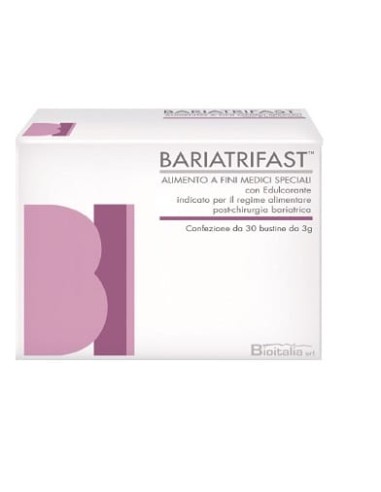
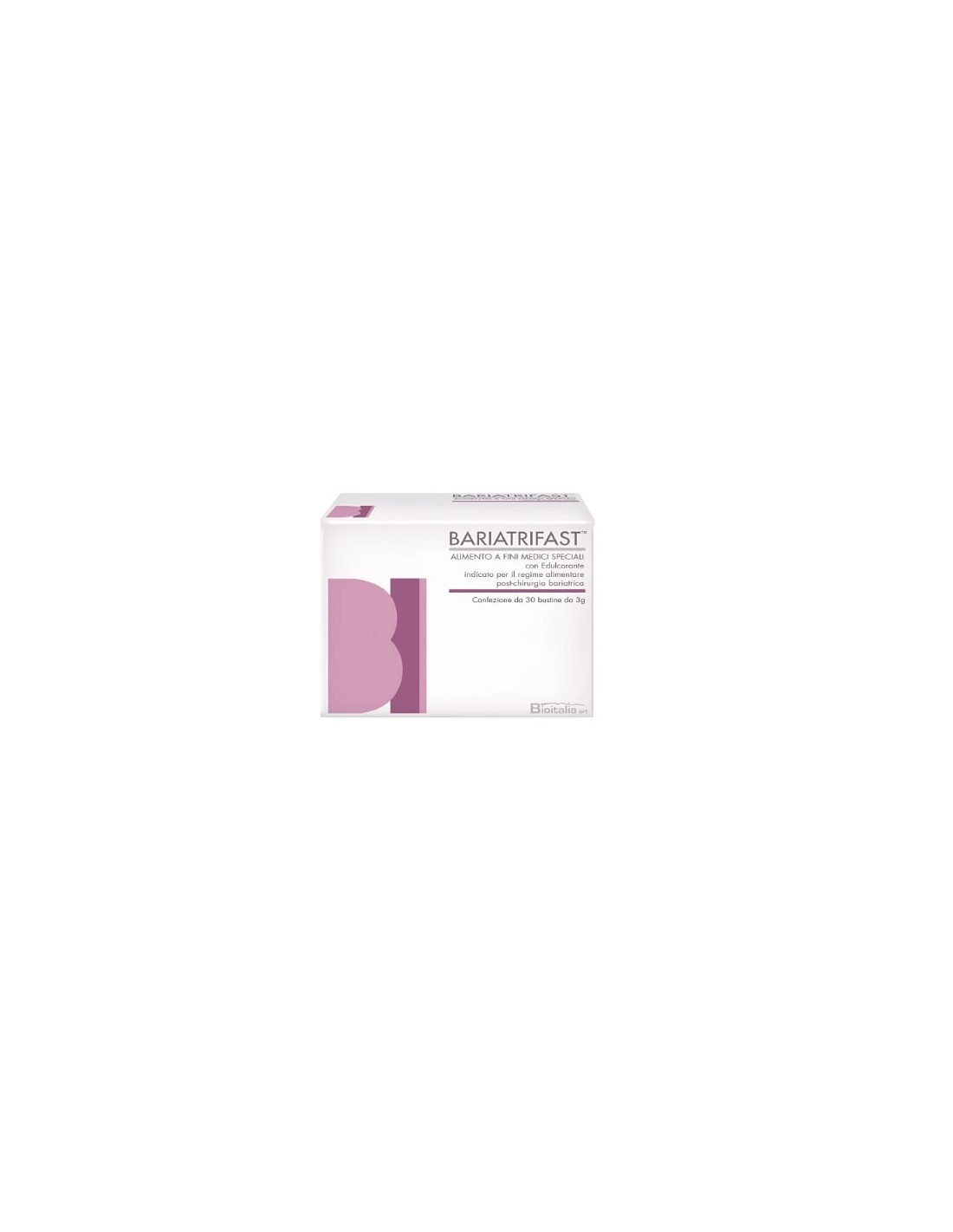
Bariatrifast is a dietary food for special medical purposes indicated for the diet after bariatric surgery.
Bariatric surgery The field of surgery dealing with surgical techniques aimed at reducing body weight and fat mass.
Bariatric surgery is mainly divided into malabsorptive techniques and restrictive techniques.
Risks following bariatric surgery The scientific literature shows that patients who have undergone bariatric surgery are at high risk of nutritional deficiency, especially with regard to vitamins and minerals such as iron, selenium, zinc and copper.
Nutritional deficiency can lead to chronic deficiency states in people who have undergone malabsorptive bariatric procedures.
Vitamin B12 deficiency Vitamin B12 deficiency is a common consequence of gastric bypass due to reduced digestion of cobalamin-binding proteins and reduced formation of the vitamin B12-intrinsic factor complex.
If the deficiency persists, there is a high risk of irreversible neuropathy.
Iron deficiency Iron deficiency and anaemia are the most common complications following bariatric surgery.
For this reason, an additional iron supplement of at least 45 mg a day is required, the absorption of which can be increased by the presence of vitamin C.
In cases of gastric bypass and/or other malabsorptive procedures, guidelines suggest supplementation with 65 mg of iron twice a day in combination with vitamin C.
Vitamin C deficiency Vitamin C supplementation increases the intestinal absorption of iron.
Folate, calcium and vitamin D deficiency The deficiencies most frequently found in patients who have undergone procedures with a strong restrictive component (gastric banding and sleeve gastrectomy) concern, in addition to iron, folic acid, calcium and vitamin D.
Calcium should be taken separately as it may hinder the intestinal absorption of iron and zinc; for this reason calcium has not been included in the product.
Thiamin deficiency Thiamin is absorbed through the proximal duodenum.
Deficiencies of this vitamin are due to reduced gastric acid secretion and reduced daily intake, or result from regurgitation.
Vitamin A, E and K deficiency Fat-soluble vitamin deficiency following bariatric surgery is induced by bile acid deficiency.
Vitamin A deficiency in particular results from poor nutritional intake, malabsorption and/or impaired hepatic release of the vitamin.
As for vitamin K, deficiency is found in 50-70% of patients within 2-4 years of the operation.
Vitamin E supplementation is necessary, as its deficiency can lead to anaemia and peripheral neuropathy.
Selenium and copper deficiency Nutritional anaemias following malabsorptive bariatric surgery procedures may involve selenium and copper deficiencies.
What are the recommendations based on consistent scientific evidence? The qualitative and quantitative composition proposed for Bariatrifast is based on international guidelines and is specifically designed for the nutrition of people who have undergone bariatric surgery, to make up for vitamin and trace element deficiencies, preventing any conditions associated with such deficits.
It is advisable to take Bariatrifast consistently during the first year after surgery and subsequently to repeat it in cycles as suggested by international guidelines.
It is recommended that the prescription be personalised by the doctor according to the patient's clinical situation.
It may also be indicated in all conditions characterised by malabsorption problems, for example during cancer therapies.
How should it be taken? Take one sachet a day.
Dissolve the contents of one sachet in a glass of water.
Alternatively, the contents of the sachet can be mixed into yoghurt, fruit juice and/or puréed fruit.
Warnings Bariatrifast must be used under medical supervision.
Do not exceed the recommended daily dose.
Keep out of the reach of children under three years of age.
The product is not suitable as a sole source of nutrition.
Store in a cool, dry place.
Composition Maltodextrins, magnesium oxide, vitamin E (DL-alpha-tocopheryl acetate), ferrous fumarate, vitamin C (L-ascorbic acid), vitamin D (cholecalciferol), vitamin B12 (cyanocobalamin), flavouring, vitamin B1 (thiamin hydrochloride), vitamin A (retinyl acetate), niacin (nicotinamide), pantothenic acid (calcium D-pantothenate), zinc oxide, copper gluconate; sweetener: sucralose; vitamin K (phylloquinone), vitamin B6 (pyridoxine hydrochloride); colour: E101; riboflavin, folic acid (pteroylmonoglutamic acid), sodium selenite, D-biotin.
| Ingredients | per 100 g | per sachet
(3 g) |
Energy
Fat
of which saturates
Carbohydrate
of which sugars
Fibre
Protein
Salt
Magnesium
Iron
Zinc
Copper
Selenium
Vitamin C
Vitamin E
Thiamin
Riboflavin
Vitamin B6
Pantothenic acid
Niacin
Vitamin A
Folic acid
Biotin
Vitamin B12
Vitamin D | 776.85 kJ/183.4 kcal
0 g
0 g
48.39 g
4.63 g
0.39 g
0.077 g
0 g
13333.3 mg
2166.7 mg
333.3 mg
33.3 mg
1833.3 mcg
4000 mg
3333.3 mg
333.3 mg
43.3 mg
50 mg
333.3 mg
333.3 mg
40000 mcg
13333.3 mcg
1666.7 mcg
16666.7 mcg
5833.3 mcg | 23.31 kJ/5.5 kcal
0 g
0 g
1.38 g
0.14 g
0.011 g
0.002 g
0 g
400 mg
65 mg
10 mg
1 mg
55 mcg
120 mg
100 mg
10 mg
1.3 mg
1.5 mg
10 mg
10 mg
1200 mcg
400 mcg
50 mcg
500 mcg
175 mcg |
Format Pack of 30 sachets of 3 g each.
Net weight: 90 g