
Shopping Cart


Back and neck pain: causes, remedies and pharmacist's advice
Back pain and neck pain are among the most common complaints of all and affect almost everyone at least once in their life. In most cases they are linked to poor posture, muscle tension and a sedentary lifestyle, and they improve with movement, heat and a few good habits.
Read the full guide ↓Useful products for back and neck pain
Self-heating wrapsMassage gels and creamsSupports and collarsSupplements for muscle function


Self-heating wraps
ThermaCare Versatile Self-heating Wrap XL 2 Pieces
ANGELINI (A.C.R.A.F.) SpA
981076122
€8.68
ThermaCare Versatile Wrap XL offers relief from muscle and joint pain thanks to therapeutic heat. Ideal for tension and fatigue. Size: 2 pieces.

€2.81
Vegetallumina Neck Wrap provides relief from muscle tension and neck pain thanks to its therapeutic heat. Format: 1 piece, 30 x 9.5 cm.
Self-heating wraps
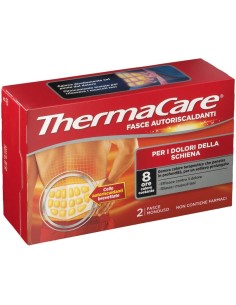
ThermaCare Back Self-Heating Therapeutic Heat Wrap 2 Pieces
ANGELINI (A.C.R.A.F.) SpA
981076060
€8.35
ThermaCare Back Wrap for muscle pain offers prolonged relief thanks to therapeutic heat that relaxes the muscles, ideal for men and women. Format: 2 pieces.

€2.82
Calmadol Self-Heating Wrap to provide relief from muscle pain and joint stiffness thanks to heat therapy. Size: 1 piece.

€4.10
Medicated patches with arnica, useful for relieving muscle and joint pain in the neck, shoulder, wrist and knee.
Self-heating wraps
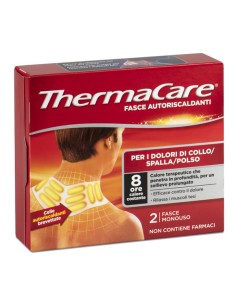
Thermacare Therapeutic Heat Self-Heating Wraps Neck/Shoulder/Wrist 2 Pieces
ANGELINI (A.C.R.A.F.) SpA
981076072
€6.94
Thermacare Self-Heating Wraps Neck Shoulder Wrist for pain relief through heat therapy, for tense muscles and joint pain. Size: 2 pieces.
€7.63
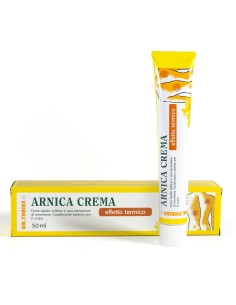
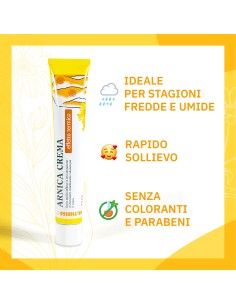
Theiss Arnica Warming Ointment 50 g, a warming ointment to bring relief and warmth to areas under strain. Pack size: 50 g tube.
Self-heating wraps
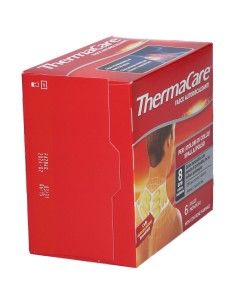
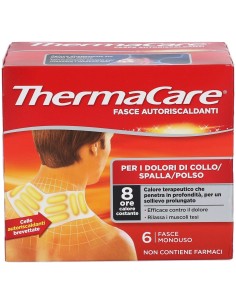
ThermaCare Therapeutic Heat Self-heating Wraps Neck/Shoulder/Wrist 6 Pieces
ANGELINI (A.C.R.A.F.) SpA
981076096
€15.98
ThermaCare Self-heating Wraps for neck, shoulder and wrist muscle pain. Provide relief thanks to therapeutic heat for 8 hours. Format: 6 pieces.

€17.00
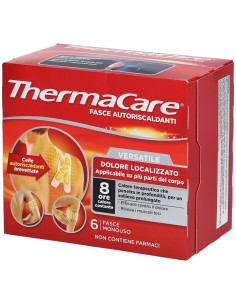
Thermacare Versatile Self-Heating Wraps for heat therapy, providing long-lasting relief from muscle and joint pain. Ideal for fatigue and strains. Format: 6 pieces.

€8.18
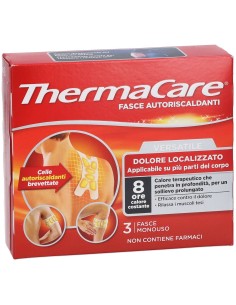
ThermaCare Versatile Self-Heating Wraps for muscle pain and joint pain, providing relief for up to 8 hours. Pack size: 3 pieces.
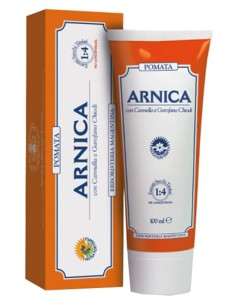
€11.32
Arnica Forte Ointment by Erboristeria Magentina, ideal for knocks and muscle aches, helps the reabsorption of bruises. Format: 100 ml tube.
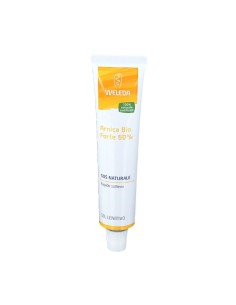
€7.97
Arnica Bio Forte 60% Soothing Gel, a gel with 60% arnica for bruises and muscle tension. Ideal for fast relief. Format: 25g.
Automatic selection based on product categories and features: for a tailored choice, ask the pharmacist.
What it is and how to recognise it
The most common form of back pain is lower back pain, felt in the lower part of the back; it can radiate towards the buttocks and make it difficult to get up, bend or sit for long. Neck pain, on the other hand, affects the neck and shoulders: it is felt as stiffness, difficulty turning the head, tension in the shoulders and sometimes a headache starting from the back of the head.
The pain is often accompanied by muscle knots, that is areas that are hard and tender to the touch. When the discomfort travels down the leg or arm, with tingling, a nerve may be involved and this should be assessed by a doctor. In the vast majority of cases, however, it is a non-specific, benign complaint that tends to resolve within a few days or weeks with the right care, although it can recur over time if the habits that encourage it are not corrected.
The most common causes
- Poor posture at the computer or when looking at a smartphone with the head tilted forward.
- A sedentary lifestyle and poorly trained abdominal and back muscles.
- Lifting weights with a rounded back or sudden twisting movements.
- Stress and emotional tension, which often build up in the neck and shoulders.
- Draughts, temperature swings or an unsuitable pillow.
- Excess weight, pregnancy and age-related changes in the spine.
Remedies and practical tips
- Stay active: with ordinary back pain, prolonged bed rest tends to slow recovery, whereas walking helps.
- Apply heat to the tense area to ease muscle tension.
- Set up your workstation properly: screen at eye level, feet on the floor, back supported, breaks every hour.
- When lifting a weight, bend your knees and keep it close to your body.
- Spend a few minutes a day on mobility exercises for the neck and shoulders and on core strengthening; Pilates, yoga and swimming are excellent allies.
- Choose a medium-firm mattress and a pillow that keeps your neck aligned.
- Manage stress with breathing or relaxation techniques, which are particularly useful for neck pain.
What you can find at the pharmacy
Self-heating wraps and adhesive heat pads release constant heat for several hours and can be worn under clothes, even at work: they are among the most popular remedies for lower back and neck pain. For local action there are massage gels and creams with arnica, devil's claw, camphor or menthol, with a warming or cooling effect.
Soft collars, elastic lumbar belts and ergonomic pillows can provide support in some situations, but they should be used for limited periods so as not to weaken the muscles. Among food supplements, some formulas with magnesium, B vitamins or plant extracts may contribute to normal muscle and nerve function.
Food supplements are not a substitute for a varied, balanced diet and a healthy lifestyle. During pregnancy, ask your doctor before using products with essential oils or plant extracts.
When to see a doctor
- Pain that appeared after a fall or an injury.
- Pain radiating to the leg or arm with tingling, loss of strength or loss of sensation.
- Difficulty controlling urine or bowels, or numbness in the genital area: this needs urgent assessment.
- Fever, unexplained weight loss or pain that gets worse at night while resting.
- Neck pain with severe dizziness, visual disturbances or a sudden, intense headache.
- Discomfort that does not improve after a few weeks, and always in children.
Frequently asked questions
Is it better to stay in bed with back pain?
For ordinary back pain, no: staying moderately active, as far as the pain allows, promotes faster recovery than complete rest.
Can neck problems cause headaches and dizziness?
Tension in the neck muscles can cause a headache starting from the back of the head; significant dizziness, however, should always be assessed by a doctor, as it can have other causes.
How long can a self-heating wrap be worn?
It depends on the product, usually several hours: follow the instructions on the pack, do not apply it to broken skin and do not use it while sleeping unless this is specified.
The information on this page is for general information purposes only and does not replace the advice of a doctor or pharmacist. Food supplements should not be used as a substitute for a varied, balanced diet and a healthy lifestyle. If symptoms persist or are severe, consult a healthcare professional.