
Shopping Cart


Baby colic: causes, remedies and pharmacist's advice
Baby colic tests the patience of the whole family: intense crying, often at the same time of day, a tense tummy and drawn-up legs. In most cases it is a passing phenomenon linked to the maturing of the gut, but it is useful to know how to recognise it and how to bring your baby relief.
Read the full guide ↓Useful products for baby colic
Probiotic dropsAnti-wind dropsHerbal teas for babiesAnti-colic bottles

€13.43
Food supplement in drops based on lactase, lemon balm and fennel, useful for digestive function and the elimination of gas. 15 ml bottle.

€7.21
Prolife lactic ferments for children is a food supplement designed for newborns and very young children, based on live lactic ferments such as Lactobacillus reuteri. Regular intake of this product can bring benefits to the child's well-being, such as: Supporting the balance of the intestinal bacterial floraHelping to counteract the passage of...

€16.74
Food supplement in drops based on probiotics (L. reuteri and L. rhamnosus GG), useful to support the balance of the intestinal bacterial flora. 10 ml bottle.

€17.33
Reuterin Kids is a supplement in drops based on the Lactobacillus reuteri LMG P-27481 strain, useful to support the balance of the intestinal bacterial flora of newborns and children. 8 ml bottle, gluten-free and naturally lactose-free.
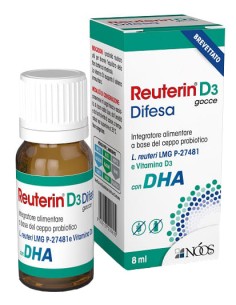
€17.18
Food supplement in drops based on L. reuteri, vitamin D3 and DHA, helpful for the balance of the intestinal flora and immune defences. 8 ml bottle.

€15.48
Supplement in capsules and tablets based on PEA, quercetin, Hericium, Berberis and Lactobacillus rhamnosus GG, to support intestinal regularity and the balance of the bacterial flora. Pack of 15 capsules + 15 tablets.

€14.24
Food supplement in capsules based on probiotics, PEA and Hericium and Undaria extracts, to support the balance of the intestinal flora. Pack of 15 capsules.

€15.66
Pancino is a food supplement in drops based on Lactobacillus rhamnosus GG (ATCC 53103), which supports the balance of the intestinal bacterial flora. Formulated for children over 3 years of age, it is gluten-free and lactose-free. 10 ml bottle with graduated pipette.
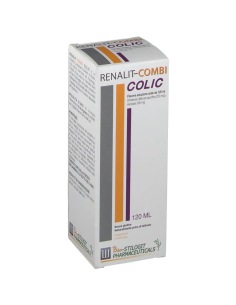
€21.94
Renalit Combi Colic, syrup for the drainage of body fluids and urinary function thanks to boldo, bearberry, herniaria and asparagus. Pack size: 120 ml bottle.

€7.19
Prolife 10 Forte is a supplement that helps balance the intestinal bacterial flora when it has been altered by antibiotics, diarrhoea or dietary imbalanceFeatures of Prolife Forte:high content of live lactic ferments and B vitamins contains a gluco-oligosaccharide that acts as a prebiotic and supports the action of the lactic fermentsits vitamin complex...

€15.45
Caprigyn sachets is a food supplement based on crispatus, acidophilus, plantarum, reuteri, inulin and beta-glucans. Thanks to the action of its active ingredients, this product is useful for:Preserving the well-being of the bacterial flora Supporting intestinal well-being and motility Helping counteract abdominal bloating

€33.57
Melatonmed 1mg, a melatonin supplement to support sleep and reduce jet lag. Suitable for vegans. Pack size 100 ml bottle.
Automatic selection based on product categories and features: for a tailored choice, ask the pharmacist.
What it is and how to recognise it
We talk about infant colic when an otherwise healthy baby who is growing well has bouts of intense crying that are hard to soothe, lasting even hours, recurring on several days a week and often starting in the late afternoon or evening. It usually begins in the first weeks of life and tends to ease spontaneously around the third or fourth month.
During a bout the baby goes red in the face, clenches their fists, draws their legs up towards the tummy or stiffens them, arches their back and may pass wind. The tummy often looks tense and swollen. Between episodes the baby feeds, sleeps and behaves normally.
Not all evening crying is due to colic: hunger, the need for contact, tiredness or a dirty nappy are common causes and should be ruled out first. Keeping a small diary of feeds, sleep and crying bouts for a few days can help the paediatrician get a clearer picture.
The most common causes
The exact causes are not fully understood and there are probably several. Among the most studied factors are the immaturity of the digestive system and the nervous system that regulates it, the composition of the gut flora still being established, air swallowed during feeding (especially if the baby feeds greedily or the latch is not correct) and, in some cases, a sensitivity to certain milk proteins. Tiredness and the baby's difficulty in coping with the stimuli of the day also seem to play a part, which explains why it typically appears in the evening.
Remedies and practical tips
- Check the position during feeding: the baby's head should be higher than the stomach and they should latch well onto the nipple or teat.
- Wind your baby during and after feeds, holding them upright against your shoulder.
- If you use a bottle, choose teats with a hole suitable for the baby's age and bottles with an anti-colic valve.
- Try the "tiger in the tree" hold: the baby face down along your forearm, with one hand gently supporting the tummy.
- Massage the tummy with clockwise circular movements, with warm hands, away from feeds.
- A calm environment, soft lighting, skin-to-skin contact, rhythmic rocking or white noise can help them settle.
- If you are breastfeeding, do not cut foods out of your diet on your own initiative: talk to the paediatrician first.
- Give yourself breaks: if you feel exhausted, hand the baby over to someone else for a few minutes.
What you can find at the pharmacy
Among the most requested solutions are probiotic drops formulated for newborns: some specific strains have been studied precisely during the colic period, and several studies suggest they may help reduce crying time in some babies. They are usually given once a day, on a spoon or on the nipple, for a few weeks.
There are also anti-wind drops registered as medical devices, which help eliminate air bubbles in the gut, and preparations based on gentle plant extracts such as chamomile, fennel or lemon balm, to be used only in age-specific formulations. Accessories are also useful: anti-colic bottles, slow-flow teats and warming wraps or cushions for the tummy (always checking the temperature). Before starting any product in the first months of life, it is best to consult the paediatrician.
When to see a doctor
Colic crying is not dangerous, but it should always be assessed by the paediatrician at least once to rule out other causes. Contact a doctor immediately if the baby has a fever (in the first three months even a mild one), vomits often or forcefully, refuses food, does not gain weight, has diarrhoea or blood in the stools, seems unusually drowsy or floppy, or if the crying is different from usual (higher-pitched, whimpering, continuous). Also ask for help if you feel you cannot cope: parents' exhaustion is an important aspect not to be overlooked.
Frequently asked questions
Up to what age does colic last?
It generally eases between the third and fourth month of life, although every baby has their own timing.
Can formula milk cause colic?
Colic affects both breastfed and formula-fed babies; any change of milk should only be decided with the paediatrician.
Are herbal teas for babies safe?
Only if they are age-specific and in small amounts: in the first months they must not replace breast milk or formula, and sugar or honey should never be added.
The information on this page is for general information purposes only and does not replace the advice of a doctor or pharmacist. Food supplements should not be used as a substitute for a varied, balanced diet and a healthy lifestyle. If symptoms persist or are severe, consult a healthcare professional.