
Shopping Cart


Head lice: how to spot and get rid of them, pharmacist's advice
Head lice are a very common nuisance among school-age children and have nothing to do with poor hygiene. Spotting them early and following the treatment methodically is the quickest way to get rid of them and limit their spread.
Read the full guide ↓Useful products for head lice
Head lice lotions and gelsHead lice shampoosNit combsPreventive sprays
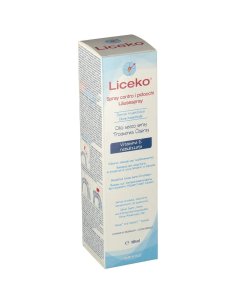
€18.84
Anti-lice dry oil spray based on tocopheryl acetate (vitamin E), which acts by physical suffocation against head lice in 20 minutes. 100 ml bottle with comb included.

€16.92
Cosmetic spray based on lavender and lavandin essential oils, for the daily prevention of head lice. 200 ml bottle, suitable from 3 years.

€12.23
Dekar Shampoo 2 anti-lice is a shampoo and shower gel indicated for the treatment of lice on the scalp and the whole body. It can also be used in the treatment of scabies, together with Scab shampoo and itch-relieving products. It contains benzyl benzoate and quassia, which together act to:eliminate lice;create an environment unfavourable to their...


€6.68
Combylice nit comb is designed for removing lice and nits thanks to its metal teeth with a high catching capacity. Combylice nit and lice comb is effective yet protects the hair during the removal procedure, which involves:preferably damp hairdividing the hair into sectionsplacing the comb close to the scalp, where lice nestThe product has rounded tips...
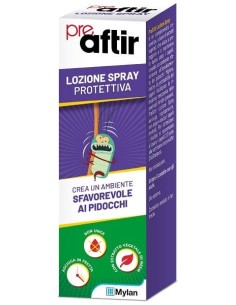
€9.30
PreAftir Anti-Lice Spray Lotion protects and keeps hair and scalp in good condition, creating an environment that is unfavourable to lice settling in. Its action:improves combability, making the mechanical removal of nits easier;counters infestation and helps prevent possible relapses;soothes irritation and redness of the scalp, rehydrating the...

€17.52
Anti-lice shampoo based on octyldodecanol, which works by a physical mechanism: kills head lice and nits, cleanses and reduces the risk of re-infestation for up to 72 hours. For adults and children from 4 years. 100 ml bottle with comb.

€8.60
Mediker Preventivo spray 100 ml is an insecticide-free product designed to protect the scalp of children and adults from lice infestation. Mediker anti-lice spray lotion is effective for: counteracting the settling and reproduction of lice enhancing the cleansing action on the scalp making it easier to remove any nits while combing

€11.06
Head lice prevention spray Milice Pido K.O. 100 ml, made by Giuliani, is a preventive spray that helps keep lice away and protect the hair. Lice spray:Can also be used on fabricsHas a preventive actionSuitable for daily useMilice lice spray has a gentle formula and is suitable for children.


€14.63
Milice foam multipack + shampoo + mini comb, made by Giuliani, is a kit to counteract and eliminate head lice and nits. The Milice head lice kit contains:A heat-sensitive foam based on natural pyrethrinsA fine-toothed comb to remove lice and nitsA cleansing shampoo with apple cider vinegar.
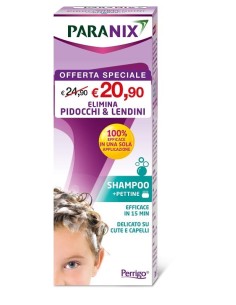
€14.32
Dual-action treatment shampoo against head lice and nits that cleanses the hair during application. 200 ml bottle, with nit comb included.

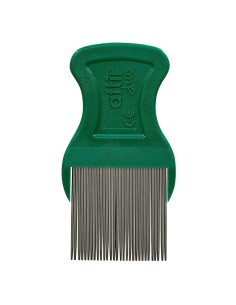
€14.77
Aftir Duo Head Lice and Nits Lotion 100 ml is a pharmacy product particularly recommended to treat and eliminate nits and lice.Aftir Duo Head Lice and Nits Lotion 100 ml:its action ensures maximum effectiveness against head lice.It contains no neurotoxic insecticides, preventing lice from developing resistance to the treatment.Silicone-free product, does...
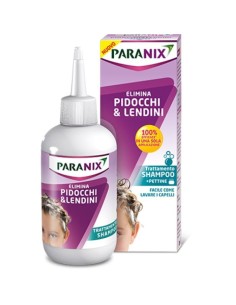
€18.74
Paranix extra strong shampoo, a shampoo for treating head lice and nits, works in 5 minutes and protects for up to 72 hours. Size: 200ml
Automatic selection based on product categories and features: for a tailored choice, ask the pharmacist.
What it is and how to recognise it
Head lice infestation (pediculosis) is the presence on the scalp of small greyish-white insects, a few millimetres long, which feed on blood and lay their eggs (nits) at the base of the hair. Nits are oval, whitish or pearl-coloured and, unlike dandruff, remain firmly attached to the hair shaft and do not come away when blown on or shaken.
The typical symptom is an itchy scalp, especially behind the ears and at the nape of the neck, which may appear even several weeks after infestation; scratching can cause small sores. However, there is not always itching: this is why checking the hair regularly with a fine-toothed comb, in natural light, is the most reliable way of finding out.
The most common causes
Lice do not jump or fly: they are almost always spread through direct head-to-head contact, typical of children's games, hugs and group photos. More rarely they pass via shared objects such as brushes, combs, hats, scarves, hair clips or pillows. They do not depend on how clean or how long the hair is, although long loose hair offers more opportunities for contact. Pets do not transmit human lice. Away from the head a louse survives only briefly, generally one or two days.
Infestations are more frequent when school starts again and after holidays spent in groups, when close contact between children increases. Adults living with them can also be affected, especially mums and siblings.
Remedies and practical tips
- Check all family members and treat only those who actually have live lice or nits close to the root.
- After treatment, run the fine-toothed comb through damp, detangled hair section by section, wiping it frequently on a tissue.
- Repeat the combing every two to three days for about two weeks, to catch lice hatched from any nits that were missed.
- Wash pillowcases, towels, hats and scarves used in the last two days at 60 °C; anything that cannot be washed should be sealed in a bag for a few days.
- Soak brushes and combs in very hot water for about ten minutes.
- There is no need to disinfest the house or treat sofas and carpets: vacuuming is enough.
- Let the school or sports group know, so that other parents can check too.
- To prevent them, tie long hair back and teach children not to swap hats and brushes.
What you can find at the pharmacy
Physically acting head lice treatments are now very widespread, often registered as medical devices: lotions, gels, foams or sprays based on dimeticone or other silicone and plant oils that coat the parasite and block its breathing. Because they act mechanically, they are also suitable for repeated use. They are applied to dry or damp hair according to the instructions, left on for the time indicated and rinsed out with shampoo; many manufacturers recommend repeating the application after 7-10 days.
A nit comb is essential, ideally a metal one with long, closely spaced teeth. There are also detangling shampoos and conditioners that make combing easier, and preventive sprays that some parents use during outbreaks at school: they can be an extra help, but do not replace regular head checks. Always check the minimum age and warnings of the product, especially for young children.
When to see a doctor
Ask the paediatrician or doctor for advice if the child is under two or has very sensitive skin, during pregnancy or breastfeeding, in the presence of asthma or known allergies, if the scalp is red, crusty, has pus or the neck lymph nodes are swollen, or if you keep finding live lice despite two correct treatments. The doctor will assess any skin infections or the need for different strategies.
Frequently asked questions
Can children go back to school after treatment?
Generally yes, from the day after the first treatment; however, it is best to follow the guidance of your school and local health authority (ASL).
Do old wives' remedies such as vinegar work?
Vinegar can help loosen nits during combing, but on its own it is not enough to get rid of lice.
Do you need to cut the hair short?
It is not necessary: with the right product and careful combing, the problem can be solved even with long hair.
The information on this page is for general information purposes only and does not replace the advice of a doctor or pharmacist. Food supplements should not be used as a substitute for a varied, balanced diet and a healthy lifestyle. If symptoms persist or are severe, consult a healthcare professional.