
Shopping Cart


Colds and coughs in children: remedies and pharmacist's advice
Colds and coughs in children are among the most common reasons for restless nights, especially in the colder months and when starting nursery or preschool. In most cases they are mild viral infections that clear up on their own, and a few simple measures can make these days much more bearable.
Read the full guide ↓Useful products for colds and coughs in children
Saline solutionSeawater spraysNasal aspiratorsNebulisersCough syrupsImmune support supplements

Moisturising nasal sprays
Espersol Hypertonic Nasal Spray Solution with Sea Water and 0.02% Hyaluronic Acid 100 ml
I.P. Farma
935329223
€14.06
Espersol Nasal Spray, a hypertonic solution to clear a blocked nose caused by allergies, colds, rhinitis and sinusitis. Pack size: 100 ml spray bottle.

Nasal washes
Narhinel Saline Solution for Nasal Aspirator 20 Vials of 5 ml
HALEON ITALY Srl
903367148
€3.20
Narhinel Saline Solution, sterile saline solution for the nasal hygiene of newborns and children, ideal for moisturising and clearing a blocked nose. Format: 20 vials of 5 ml.


Moisturising nasal sprays
Isotonic Seawater Spray with Sodium Hyaluronate for Nasal Hygiene, Adults and Children...
MYLAN ITALIA Srl
913152397
€10.51
Ialumar Isotonic Spray Solution, an isotonic solution for the daily nasal hygiene of adults and children. Helps clear nasal secretions. Size: 100 ml.
Children's immune defences
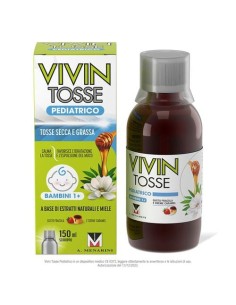
Vivin Tosse Pediatrico Syrup for Dry and Chesty Cough Strawberry and Crème Caramel...
Menarini
975443817
€6.08
Vivin Tosse Pediatrico syrup for dry and chesty cough creates a protective film that soothes an irritated throat thanks to marshmallow, plantain and honey. Pack size: 150 ml.

€3.48
Prontex Physio isotonic saline solution 20 ampoules of 5 ml is a sterile, isotonic saline solution for the nose.What is saline solution for?Suitable for nasal,eye and ear washes,aerosol therapy and nasal irrigation.Prontex medical solutions can be used at all ages, with different administration.Prontex is an isotonic saline solution suitable for problems...

€6.39
Tusseval Kids Cough Syrup, a cough syrup that soothes children's airways, with honey and propolis. Pack size: 200 ml bottle.

Nebulisers
Libenar 3% Hypertonic Saline Solution for Aerosol Inhalation 18 Single-Use Vials x 4 ml
PERRIGO ITALIA Srl
975197474
€6.45
Libenar Aerosol 3%, hypertonic solution for aerosol therapy; helps clear mucus and prevents bronchial dryness. Helpful in cystic fibrosis. Pack size: 18 vials of 4 ml.


Nasal washes & irrigation
Nasir Nasal Douche with Isotonic Saline Solution 10 Bags 250 ml + 1 Blister
E.P. MEDICA Srl
920344569
€24.73
Nasir Nasal Douche, an isotonic saline solution for nasal irrigation, ideal for the hygiene and well-being of the mucous membranes. Size: 10 bags of 250ml + 1 device.

Nebulisers
Libenar 3% Hypertonic Saline Solution for Aerosol Inhalation 30 Single-Use Vials x 4 ml
PERRIGO ITALIA Srl
983749058
€8.50
Libenar Aerosol 3%, a hypertonic saline solution that helps eliminate mucus and protect the bronchial mucosa. Ideal in case of cystic fibrosis. Pack size: 30 vials.

Nasal washes
Saline Solution for Nose, Eyes and Aerosol Therapy 20 x 5 ml
Euritalia Pharma
939562272
€2.71
Sterile saline solution in single-dose vials for nasal and eye hygiene in newborns, children and adults, also suitable for aerosol therapy. 20 vials of 5 ml.

Nasal washes & irrigation
Nasir Nasal Douche with Isotonic Saline Solution 6 Bags 500 ml + 1 Blister
E.P. MEDICA Srl
920344571
€24.24
Nasir Isotonic Nasal Douche for the daily nasal hygiene of adults and children, helps prevent blockages. Pack size: 6 bags of 500 ml + 1 blister.


€12.33
Rinorex is a hypertonic saline solution designed for congested airways, especially the nose, and is very useful to:
Thin secretions to clear the nose;
Moisturise the mucous membranes;
Relieve the symptoms of colds and rhinitis.
Pack size: pack of 25 sterile single-dose vials of 3 ml each.
Automatic selection based on product categories and features: for a tailored choice, ask the pharmacist.
What it is and how to recognise it
A cold is an infection of the upper airways that shows up as a runny nose, sneezing, nasal congestion and sometimes a sore throat and a slight temperature. Mucus, clear and runny at first, may become thicker and yellowish-green over the following days without this necessarily indicating a bacterial infection. Symptoms usually last a week, sometimes ten days.
A cough often accompanies a cold: it can be dry and tickly or chesty, with phlegm. In young children a cough at night or on waking is common, due to mucus running from the nose down to the throat when they are lying down. Babies, who breathe almost exclusively through the nose, struggle to feed and sleep when their nose is blocked.
The most common causes
The culprits are almost always viruses, of which there are a great many types: this is why children, whose immune system is still learning to recognise them, can fall ill many times a year, especially in the first years of nursery or school. Infection spreads through droplets released by coughing and sneezing and via contaminated hands and toys. Enclosed, crowded and poorly ventilated spaces, air dried out by heating and exposure to second-hand smoke encourage infections and make symptoms more troublesome.
Remedies and practical tips
- Rinse the nose with saline solution several times a day, especially before meals and bedtime.
- In babies, after rinsing, use a nasal aspirator to gently remove the mucus.
- Offer drinks often: water, milk or, for older children, warm herbal teas; fluids help thin secretions.
- Keep the air at home humidified and not too warm, airing the rooms every day.
- During sleep, slightly raising the head end of the mattress (not with pillows in a baby's cot) can reduce night-time coughing.
- Over the age of one, a teaspoon of honey before bed can soothe a cough; honey should never be given to babies under twelve months.
- The whole family should wash their hands often, and children should be taught to cough into their elbow.
- Keep your child away from cigarette smoke, including smoke residue left on clothes and in rooms.
What you can find at the pharmacy
The foundation is saline solution, in single-dose vials or as isotonic seawater sprays, with nozzles designed for little ones' nostrils. Hypertonic solutions, which are more concentrated, can help decongest when the nose is very blocked, but it is best to check with the paediatrician before using them on babies. Nasal aspirators, manual or electric, are invaluable until the child learns to blow their nose, and nebulisers and aerosol devices make it possible to administer saline solution or any prescribed products.
For coughs there are syrups registered as medical devices, often based on honey, plant extracts or substances that form a protective film on the throat lining, useful for soothing a dry cough or helping to clear phlegm: always check the minimum age indicated. You will also find balms and patches with essential oils, to be used only in age-specific formulations because some oils are not recommended for young children, as well as immune support supplements for little ones, which may contribute to the normal function of the immune system but do not replace a varied diet.
When to see a doctor
Contact the paediatrician if your baby is under three months old and has a fever or difficulty feeding, if they are breathing fast, with effort or with indrawing between the ribs, if you hear whistling or wheezing, if the cough is barking or comes in fits, if the lips look bluish, if the fever lasts more than three days or is very high, if they complain of earache, are very drowsy, drink little or wet few nappies, or if symptoms last more than ten to fourteen days. Also see a doctor for children with asthma or other chronic conditions.
Frequently asked questions
How many times a day can you do nasal rinses?
With saline solution, even several times a day, particularly before eating and sleeping: it is a safe and well-tolerated step.
Does green mucus mean antibiotics are needed?
Not necessarily: the colour also changes during the normal course of a viral cold; the assessment is always up to the paediatrician.
Can I use balms with essential oils on my child?
Only those specific to the age indicated on the label: some essential oils, such as camphor and menthol, are not recommended for little ones.
The information on this page is for general information purposes only and does not replace the advice of a doctor or pharmacist. Food supplements should not be used as a substitute for a varied, balanced diet and a healthy lifestyle. If symptoms persist or are severe, consult a healthcare professional.