
Shopping Cart


Brittle nails: causes, remedies and pharmacist's advice
Brittle nails break, peel into thin layers or struggle to grow, and are often the result of small everyday habits. With a little care and the right products it is possible to make them stronger and more resilient.
Read the full guide ↓Useful products for brittle nails
Strengthening polishes and base coatsCuticle oils and creamsNail and hair supplementsNourishing hand creams
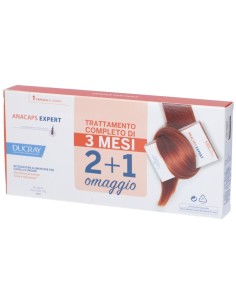
€51.06
Anacaps Expert supplement for hair and nails, promotes strength and resilience thanks to vitamins and amino acids. Pack size: 3x30 capsules.

€19.86
Collagen Hair Skin Nails by Arkofarm, a supplement for stronger hair, skin and nails thanks to collagen. Supports hydration and firmness. Format 260 g.

Hair loss
Matt Divisione Pharma Methionine and Biotin Retard Hair 30 Tablets
A&D Gruppo Alimentare Dietetico
934509807
€12.30
Matt Pharma Methionine/Biotin 30 Tablets, a hair supplement with methionine and biotin to strengthen hair and improve shine. Useful for fragile hair. Size: 30 tablets.
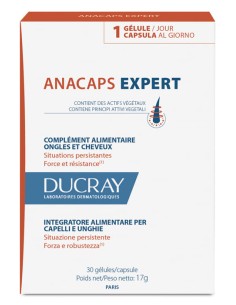
€16.34
Food supplement in capsules with biotin, zinc and amino acids, helpful to maintain healthy hair and nails. Pack of 30 capsules.
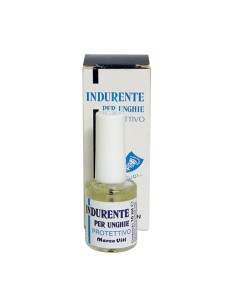
€4.00
Unghaisil nail hardener is a care product for fragile, sensitive nails that tend to break easily, effectively strengthening them. Unghaisil nail hardening polish is a product:Protective for fragile, thin nailsThat can be applied in several layersWith a clear, glossy finishThanks to this nail strengthening polish your nails will look stronger and be less...

€23.17
Timoglican Hair and Nails is a plant- and mineral-based food supplement to counteract brittle nails and hair, made by Laboratorio Farmacologico Milanese.Granules without capsule or inert excipientspreservative-freegelatine-free and cellulose-freealcohol-freeGMO-freeTimoglican granules are based on Urtica dioica.
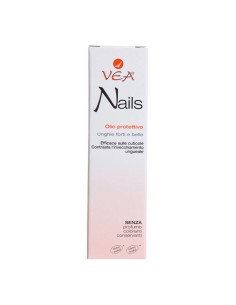
€13.03
Vea Nails is a concentrated protective oil with vitamin E that nourishes and moisturises brittle nails and cuticles, counteracting dryness and restoring a well-groomed look. 8 ml size, handy to carry with you.

€26.84
Phyto Phytophanère 1+1, supplement for hair and nails, for their strength and growth. Rich in vitamins and zinc. Format: 90+90 capsules.

€19.15
Swisse Hair Skin Nails is a supplement based on biotin, zinc, vitamin C and iron, ideal for keeping hair, skin and nails healthy. Thanks to their active ingredients, Swisse supplements are useful to:protect cells from oxidative stresssupport collagen formationprovide antioxidant propertiesFor these reasons, Swisse is considered one of the best supplements...

€3.97
Sofarmapiu' nail nipper in stainless steel for precise and safe nail care. Ideal for daily use. Size: single.

€35.78
Nail file by Sofarmapiù, for filing and caring for fingernails and toenails. Display of 60 pieces.
€11.06
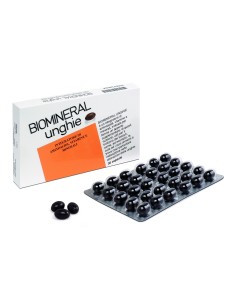
Biomineral Unghie is a supplement based on minerals, vitamins and amino acids that helps counteract nutritional deficiencies, suitable for fragile, brittle, soft nails lacking elasticity.
Format: pack of 30 capsules.
Automatic selection based on product categories and features: for a tailored choice, ask the pharmacist.
What it is and how to recognise it
The nail is made up of overlapping layers of keratin, held together by lipids and a small amount of water. When this structure weakens, brittle nails are easy to recognise: they peel into thin layers starting from the free edge (onychoschizia), break at the slightest knock, bend as if made of paper or show small lengthwise cracks. They are often also dull, with dry, cracked cuticles.
The problem is more common in women and with advancing age, and more often affects the fingernails, which are the most exposed to water, detergents and knocks.
It is useful to distinguish brittleness from other nail disorders. A brittle nail keeps its normal pinkish colour; it simply breaks or peels easily. If instead it changes colour, thickens, becomes deformed or lifts away from the nail bed, the cause is likely to be different, for example a fungal infection or a skin condition such as psoriasis, and in that case simple strengtheners are not enough. Toenails can also become brittle, especially with tight, poorly breathable shoes.
The most common causes
- Wet-dry cycles: frequently washing your hands or the dishes without gloves makes the nail swell and then dry out, and over time it peels.
- Harsh detergents, household products, acetone-based removers.
- Frequent use of gel polish or nail extensions, with vigorous removal that thins the nail plate.
- Microtrauma: using nails as tools, typing a lot, biting them.
- A diet low in protein, iron, zinc or vitamins; crash diets.
- Ageing and cold, dry weather.
- Certain skin conditions or general health problems, such as thyroid disorders.
Remedies and practical tips
- Wear rubber gloves, ideally with a cotton under-glove, when washing up and cleaning.
- After each wash, dry your hands thoroughly and apply a nourishing cream, massaging it into nails and cuticles too.
- File your nails in one direction only with a fine-grit or glass file, and keep them fairly short.
- Choose acetone-free removers and give your nails a break from polish from time to time.
- Do not cut your cuticles: gently push them back after softening them.
- Avoid using your nails to open cans or scratch off labels.
- Follow a varied diet with protein, pulses, eggs, nuts and vegetables.
What you can find at the pharmacy
- Clear strengthening polishes and base coats, formulated to create a protective layer on the nail plate and make it more resistant to breakage; some contain film-forming substances or plant derivatives. Apply according to the instructions, usually with periodic removal.
- Moisturising solutions and nail serums with ingredients such as low-concentration urea, panthenol or plant oils, which help maintain the nail's flexibility.
- Cuticle oils and creams, to be massaged in in the evening.
- Nourishing and barrier hand creams, useful for those who wash their hands often.
- Nail and hair supplements with biotin, zinc, selenium, sulphur amino acids and silicon: biotin and zinc contribute to the maintenance of normal skin and nails. As nails grow slowly, results should be assessed after at least three months.
Patience is essential: a fingernail takes several months to renew completely, so improvements are seen on the newly grown part.
When to see a doctor
You should seek the advice of a doctor or dermatologist if the nail changes colour (yellowish, greenish, with dark streaks), if it thickens or lifts from the nail bed, if pain, swelling or pus appear around the nail, if there are small pinpoint depressions or if the change affects just one nail for no apparent reason. These signs may indicate a fungal infection, a skin condition or other disorders that need assessing. Brittleness associated with tiredness, pallor or hair loss also deserves a check-up.
Frequently asked questions
Do white spots on the nails mean a calcium deficiency?
Usually not: they are mostly the sign of small knocks at the base of the nail and disappear as it grows.
Does gel polish damage your nails?
Frequent applications and vigorous removal can thin them. It is better to alternate with breaks and opt for gentle removal.
Does drinking more milk strengthen nails?
Nails are not made of calcium but of keratin: what counts is an overall varied diet with an adequate intake of protein and micronutrients.
The information on this page is for general information purposes only and does not replace the advice of a doctor or pharmacist. Food supplements should not be used as a substitute for a varied, balanced diet and a healthy lifestyle. If symptoms persist or are severe, consult a healthcare professional.