
Shopping Cart


Hair loss: causes, remedies and pharmacist's advice
Losing a few hairs every day is normal, but when hair loss increases noticeably it is natural to worry. It is often a temporary phenomenon, linked to the season or to stress, which can be tackled with the right habits.
Read the full guide ↓Useful products for hair loss
Hair supplementsAnti-hair loss ampoules and lotionsFortifying shampoosScalp treatments
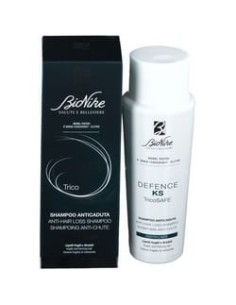
€11.22
Defence KS Shampoo, anti-hair loss for fragile hair, cleanses gently and supports stronger, healthier hair. Ideal for frequent use. Format: 200 ml bottle.

Strengthening shampoos
Aquavis Anti-Hair Loss Shampoo Hair Regeneration 150 ml
AQUAVIS Srl
987418225
€17.66
Aquavis Anti-Hair Loss Shampoo, a regenerating shampoo that gently cleanses and strengthens hair, helping to prevent hair loss. Format: 150 ml bottle.

Anti-hair loss treatments
Biothymus AC Active Anti-Hair Loss Treatment Lotion Women 100 ml
MYLAN ITALIA Srl
934408725
€29.91
Biothymus Active Women Anti-Hair Loss Lotion 100 ml is a strengthening treatment with a fortifying action on brittle, dull hair, making it more resistant. Thanks to its formulation, Biothymus Lotion for Women:Strengthens hair from the root, helping to counteract hair loss;Gives hair resilience and vigour without weighing it down;Is specifically designed...
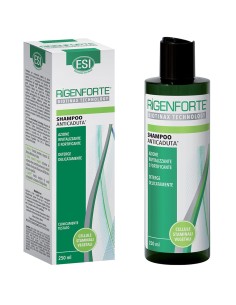
€8.54
Esi Rigenforte Anti-Hair Loss Shampoo, an anti-hair loss shampoo for fine, damaged hair that strengthens and adds volume thanks to Biotinax Technology. Format: 250 ml bottle.
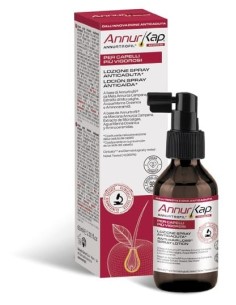
€17.24
Adjuvant anti-hair loss spray lotion with Annurtrifol, microalgae extract and ocean sea water: strengthens the hair structure, leaving hair more elastic, voluminous and resistant to pulling. 60 ml bottle, no rinse.
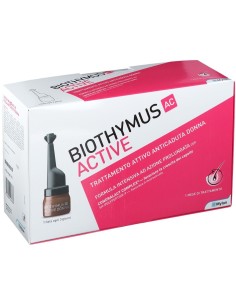

Anti-hair loss treatments
Biothymus AC Active Anti-Hair Loss Treatment for Women 10 Vials
MYLAN ITALIA Srl
934408737
€45.75
Biothymus Active is a treatment for fragile hair that helps counter hair loss and promote growth; its Condralact Complex formulation helps counter thinning hair, strengthening the hair bulb and prolonging the hair's growth phase.
Format: pack of 10 vials.

€12.00
Krin Up Anti Hair Loss Shampoo, a shampoo that helps in the prevention of hair loss, with stimulating plant extracts. Pack size: 150 ml.

€14.23
Pertrifol Anti-Hair Loss Shampoo, supporting treatment for weak, brittle hair prone to falling out. Pack size: 200 ml bottle.

€62.76
Viscaplus PRP+ is an anti hair loss treatment that stimulates regrowth and strengthens hair thanks to GFPlus and LipoQuercetin. Pack size: 6 vials of 12 ml.
€51.07
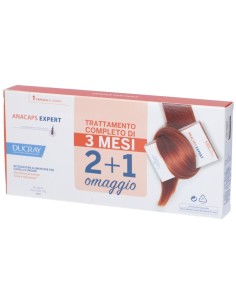
Anacaps Expert supplement for hair and nails, promotes strength and resilience thanks to vitamins and amino acids. Pack size: 3x30 capsules.


Strengthening shampoos
Klorane Fortifying & Stimulating Shampoo with Quinine, 200ml
Klorane
981971082
€10.03
An intensely stimulating anti-hair-loss treatment, the Quinine Shampoo restores strength and vitality to weakened hair.

Hair loss
Matt Divisione Pharma Methionine and Biotin Retard Hair 30 Tablets
A&D Gruppo Alimentare Dietetico
934509807
€12.30
Matt Pharma Methionine/Biotin 30 Tablets, a hair supplement with methionine and biotin to strengthen hair and improve shine. Useful for fragile hair. Size: 30 tablets.
Automatic selection based on product categories and features: for a tailored choice, ask the pharmacist.
What it is and how to recognise it
Every hair has a life cycle: a long growth phase, a short transition phase and a resting phase, at the end of which it falls out to make room for a new hair. This is why losing a few dozen hairs every day is entirely physiological. We talk about hair loss when shedding increases noticeably: lots of hairs on the pillow, in the brush or in the shower drain, and hair that looks less full.
There are different forms. Telogen effluvium is diffuse, temporary shedding that appears a few weeks or months after a triggering event. Androgenetic alopecia, on the other hand, is progressive thinning: in men it affects the temples and crown, in women mainly the central area, with the parting becoming wider. More rarely, hair falls out in well-defined round patches.
A simple home test can give you an idea: gently grasp a lock of about sixty hairs and pull lightly; under normal conditions only a few come away. If many come out, especially from several areas of the head, the shedding is probably in an active phase. This is only an indication, however: to understand what type of hair loss it is you need the expert eye of a dermatologist, who can also examine the scalp with dedicated instruments.
The most common causes
- Change of season: in autumn and, to a lesser extent, in spring many people notice a temporary increase in shedding.
- Physical or emotional stress, high fever, surgery, crash diets.
- After childbirth, when hormones return to their usual levels.
- Nutritional deficiencies, particularly of iron, protein, zinc and certain vitamins.
- Hormonal imbalances and thyroid disorders.
- Genetic predisposition and sensitivity to androgen hormones.
- Harsh treatments: frequent bleaching, very hot straighteners, very tight hairstyles.
Remedies and practical tips
- Follow a varied diet with good-quality protein (fish, eggs, pulses), green leafy vegetables, nuts and wholegrain cereals.
- Avoid overly restrictive diets, which are often paid for with hair loss a few months later.
- Wash your hair with a gentle shampoo whenever needed: washing often does not make hair fall out; the hairs left in the shower tray were already due to come away.
- Dry with the hairdryer at a moderate temperature and limit straighteners and curling tongs.
- Choose loose hairstyles, wide-toothed combs and hair ties without metal parts.
- Gently massage your scalp while shampooing to support the wellbeing of the skin.
- Look after your sleep and stress levels: hair also suffers during difficult periods.
What you can find at the pharmacy
- Hair supplements with biotin, zinc, selenium, copper, B vitamins, sulphur amino acids such as cystine and methionine, or plant extracts. Some of these nutrients contribute to the maintenance of normal hair; they are generally taken in courses of at least two or three months, the time needed to see results on new hair.
- Cosmetic anti-hair loss ampoules and lotions, to be applied to a dry or towel-dried scalp, massaging in without rinsing: they help strengthen the hair and keep the scalp in good condition.
- Fortifying shampoos and strengthening shampoos, to be combined with treatments for a more complete action.
- Specific products for sensitive or oily scalps or scalps with dandruff, because balanced skin is the basis for healthier hair.
No cosmetic product or supplement can make hair grow back where the follicle is no longer active: they can, however, support your hair during phases of temporary shedding.
When to see a doctor
It is best to consult your doctor or dermatologist if hair loss lasts more than three months, if bald patches appear, if the scalp is red, itchy, painful or flaky, if thinning progresses rapidly or if hair loss is accompanied by marked tiredness, irregular periods, weight changes or other symptoms. Targeted blood tests can reveal deficiencies or disorders that need correcting. In children, hair loss should always be assessed by the paediatrician, as should hair loss during pregnancy or while taking medication.
Frequently asked questions
How many hairs is it normal to lose each day?
Roughly up to a hundred, with variations from person to person and according to the season. What matters most is a change compared with what is usual for you.
Does cutting your hair make it stronger?
A haircut removes damaged ends and gives a neater look, but it does not act on the hair bulb and does not change hair loss.
How long does it take to see the effects of an anti-hair loss treatment?
Hair grows slowly: it usually takes at least two or three months of consistent use to assess the results.
The information on this page is for general information purposes only and does not replace the advice of a doctor or pharmacist. Food supplements should not be used as a substitute for a varied, balanced diet and a healthy lifestyle. If symptoms persist or are severe, consult a healthcare professional.