
Shopping Cart


Sore throat: causes, natural remedies and when to worry
A sore throat is one of the most common reasons people ask for advice at the pharmacy counter: burning, scratchiness and pain when swallowing can make even an ordinary day hard going. In most cases it is a passing irritation that can be soothed with a few simple measures.
Read the full guide ↓Useful products for sore throat
Throat spraysPropolis lozengesGargles and mouthwashesSupplements with plant extracts


€5.21
Sanagol Throat Voice Honey Lemon, throat lozenges with hedge mustard and rosehip, for the well-being of the respiratory tract. Pack size: box of 24 lozenges.
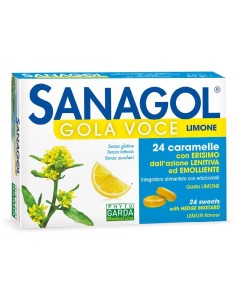
€5.07
Sanagol Gola Voce Lemon, throat lozenges with a soothing and emollient action thanks to plant extracts. Useful for the voice and the upper respiratory tract. Format: 24 lozenges.

€6.92
Golamix Propolis Grapefruit Spray for the throat, with propolis and grapefruit extract for a soothing action. Ideal for children. Pack size: 20 ml bottle.

€6.37
Propoli Erisimo Titolata Spray for oral hygiene, with propolis and hedge mustard (erysimum) for an emollient, soothing action. Format: 20 ml spray bottle.

€8.75
Lemon-flavoured food supplement in lozenges with propolis, agrimony, marshmallow and clove essential oil: contributes to throat well-being in adults and teenagers from 14 years. 20 lozenges.

€12.25
Ialoclean Oropharyngeal Spray, spray for the oropharyngeal mucosa, with hyaluronic acid, with a protective effect against redness and infections. Format: 30 ml bottle.
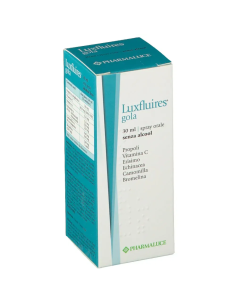
€11.66
Luxfluires Gola throat spray with propolis and vitamin C offers an emollient and soothing action on the oropharyngeal mucosa. Pack size: 30 ml spray bottle.
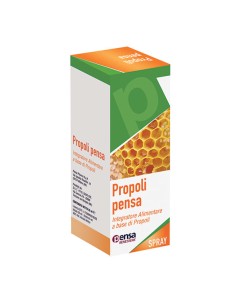
€5.22
Propoli Pensa Spray 20ml, a supplement for throat well-being with propolis and rosehip extract, useful for the immune system. Pack size: 20ml spray.


€2.88
Apropos Balsamic Candies, candies with propolis and balsamic essential oils for throat well-being. Pack size: 50 g.
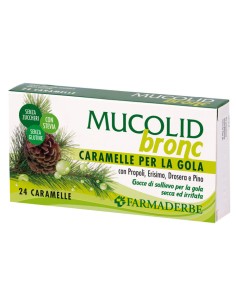
€4.71
Sugar-free lozenges with propolis, honey, pine essential oil, sundew and hedge mustard: helpful for adults wishing to support throat and respiratory well-being. Box of 24 lozenges, 70 g.
€2.18
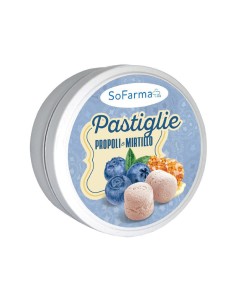
Sofarmapiu' Blueberry Candies, propolis and blueberry candies, gluten- and lactose-free. Ideal for throat well-being. Size 40 g.

€8.67
Sedigola Chewable Pearls, for nose and throat wellbeing. Useful right from the start of a cold, with Propolis and Hedge Mustard (Erysimum). Size 30 pearls.
Automatic selection based on product categories and features: for a tailored choice, ask the pharmacist.
What it is and how to recognise it
A sore throat is an inflammation of the pharynx, often called pharyngitis, which sometimes also involves the tonsils (tonsillitis) or the larynx (laryngitis). It shows up as:
- pain or burning in the throat, which increases when swallowing;
- a dry or "scratchy" feeling;
- a throat that looks red;
- a hoarse or weakened voice, if the larynx is involved;
- sometimes fever, exhaustion and swollen neck glands.
A sore throat is often the first sign of a cold or flu-like illness and comes with a blocked nose and cough.
People who use their voice a lot for work also know this complaint well: after a day of lessons, meetings or phone calls the throat can feel dry and irritated and the voice tired, without any infection at all. In these cases voice rest and good hydration are the first allies. Similarly, people who sleep with a blocked nose breathe through their mouth and often wake up with a dry, painful throat that improves during the morning.
The most common causes
In the vast majority of cases the cause is viral. Less frequently a bacterium is involved, in particular streptococcus, which is more typical in school-age children. There are also non-infectious causes:
- dry air and excessive heating, especially at night;
- breathing through the mouth because of a blocked nose;
- active and passive smoking, smog and irritating substances;
- heavy use of the voice (teachers, singers, call centre workers);
- allergies, with mucus running down the back of the throat;
- gastro-oesophageal reflux, which can irritate the throat, especially in the morning.
Remedies and practical tips
- Frequently drink small sips of warm fluids: herbal teas, water, broth.
- Try classic honey in a warm infusion (not for children under one year of age).
- Gargle with warm water and a pinch of salt to soothe the lining of the throat.
- Humidify the bedroom air and don't overheat your rooms.
- Rest your voice: avoid shouting, but also whispering, which strains the vocal cords.
- Avoid smoke, alcohol, very spicy foods or drinks that are too cold or scalding hot.
- Choose soft, easy-to-swallow foods such as soups, yoghurt and mashed potato.
What you can find at the pharmacy
Several types of products may help soothe discomfort and protect the throat lining:
- Throat sprays based on film-forming and emollient substances (for example hyaluronic acid, aloe, glycerin) that form a protective film over the irritated lining.
- Propolis lozenges and sweets, with honey, hedge mustard (erysimum) or mallow, to dissolve slowly in the mouth: salivation itself helps moisten the throat.
- Mouthwashes and gargling solutions specifically for the mouth and throat.
- Food supplements with plant extracts (echinacea, elderberry, rosehip) or with lactoferrin and zinc, which may support the body's natural defences.
- Humidifiers and diffusers to keep the air less dry.
Always follow the directions on the label and remember that food supplements are not a substitute for a varied, balanced diet and a healthy lifestyle. People allergic to bee products should avoid those containing propolis and honey.
Timing also matters when choosing the right product: sprays and lozenges are handy when you are out and can be used several times during the day, while gargles are convenient in the morning and evening. For children there are specific formulations, often sprays, with doses and ingredients suited to their age; lozenges should be avoided in little ones because of the risk of choking. If you have an intolerance or follow a special diet, check the ingredients list for sugars, gluten or sweeteners.
When to see a doctor
- High fever, over 38.5 °C, or white patches on the tonsils.
- Very severe or one-sided pain, difficulty opening the mouth.
- Difficulty swallowing saliva or breathing: in this case an urgent assessment is needed.
- Hoarseness lasting more than two to three weeks, especially in smokers.
- Recurrent sore throat or sore throat accompanied by a skin rash.
- Young children, pregnant women and people with weakened defences, before using any product.
Frequently asked questions
How can I tell if a sore throat is bacterial?
It cannot be determined by eye: the doctor can carry out a rapid throat swab to check for streptococcus and decide whether treatment is needed.
Is ice cream good for a sore throat?
Cold can bring momentary relief from the burning, but it has no effect on the inflammation. It is better to alternate it with warm drinks.
How long does a sore throat usually last?
Viral forms generally improve within 5-7 days. If it lasts longer or gets worse, it is advisable to see a doctor.
The information on this page is for general information purposes only and does not replace the advice of a doctor or pharmacist. Food supplements should not be used as a substitute for a varied, balanced diet and a healthy lifestyle. If symptoms persist or are severe, consult a healthcare professional.